
AI Agent Cost Breakdown (2026): What Businesses Actually Spend
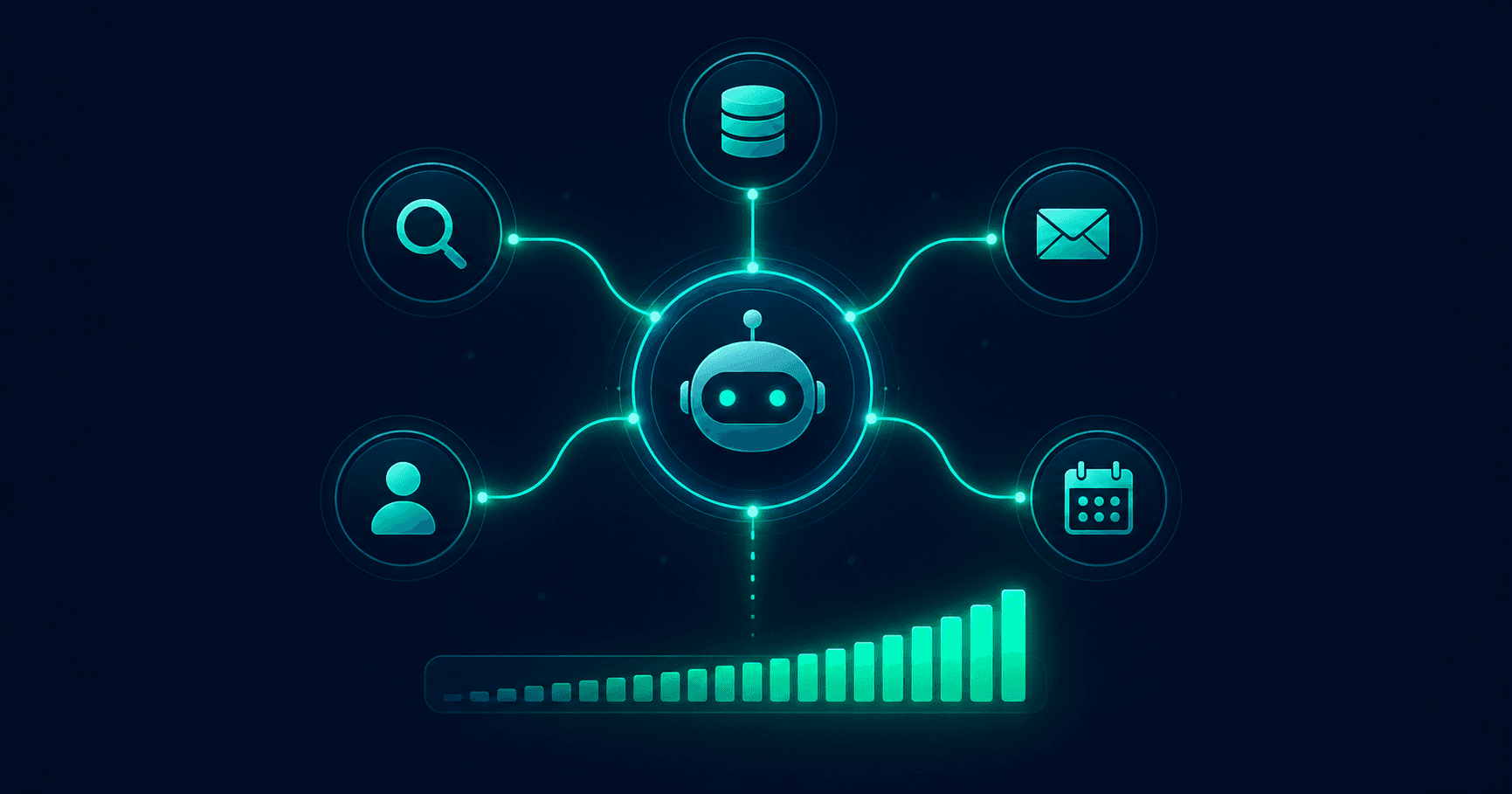
There is something unsettling about AI agents running overnight jobs while nobody is watching. Not because they are dangerous -- they are usually not -- but because of the cost question. An agent that runs 200 API calls to complete a research task at 2am can generate a surprisingly large line item by morning, and most teams did not model that.
This is the central AI agent cost problem. A chatbot exchanges one message for one response. The cost is predictable. An agent is given a goal and executes autonomously across multiple steps, tools, and API calls until it is done or until it fails and retries. The cost of that execution depends on how well the agent is built, how efficient the underlying prompts are, and how often things go wrong. For a poorly designed agent, “things going wrong” can mean a 50% cost multiplier from retries alone.
I have seen teams budget $500/month for an AI agent and end up with a $4,000 invoice because they did not account for tool call overhead, context accumulation across steps, or failed runs that get retried automatically. None of that is exotic behavior. It is what agents do.
This guide gives you the real numbers, explains where costs actually come from, and shows how to build the kind of cost model that does not surprise you.
Quick Answer
AI agent costs scale with the number of tool calls per task. A simple agent doing 5-10 API calls per task at GPT-4o pricing costs $0.05-$0.50 per task. At 10,000 tasks per month, that is $500-$5,000. DeepSeek and Claude Haiku reduce costs by 80-90%.
Key Takeaways
- ✓AI agents cost 3-10x more per task than simple chatbots because they execute multiple LLM calls, tool calls, and reasoning steps to complete one objective
- ✓Build cost ranges from $10,000 (simple single-agent) to $500,000+ (enterprise multi-agent system with complex integrations)
- ✓Monthly operating costs for a well-designed agent are typically $500-$10,000; for a poorly designed one, the same workload can cost 3-5x more
- ✓The three biggest cost drivers are model selection, failed run retry rate, and context accumulation across agent steps
- ✓Most teams underestimate operating costs because they model one API call per task, not the 5-30 calls a real agent makes
- ✓Prompt caching and model routing are the two highest-leverage cost optimizations for agentic systems
- ✓AI agents typically deliver positive ROI within 3-6 months for tasks that previously required 10+ hours/week of human labor
- ✓The "cheapest" agent architecture is rarely the one with the lowest API price; it is the one with the fewest unnecessary steps and the lowest retry rate
AI agent cost summary
Before the detail, here is where AI agent costs land by business size. These ranges reflect real build and operating costs from teams that have deployed production agents in 2025 and 2026, not theoretical estimates.
| Business size | Typical build cost | Typical monthly cost |
|---|---|---|
| Startup | $10k-$30k | $300-$1,000 |
| Small business | $25k-$75k | $500-$5,000 |
| Mid-market | $50k-$150k | $2,000-$10,000 |
| Enterprise | $100k-$500k+ | $5,000-$30,000+ |
On This Page
- 1.How much does an AI agent cost?
- 2.Cost per successful task
- 3.What is an AI agent?
- 4.What determines AI agent costs?
- 5.Why AI agent pricing estimates are often wrong
- 6.AI agent development cost breakdown
- 7.AI agent infrastructure costs
- 8.AI agent vs AI chatbot costs
- 9.Real cost scenario 1: sales prospecting agent
- 10.Real cost scenario 2: customer support agent
- 11.Real cost scenario 3: internal operations agent
- 12.Real cost scenario 4: enterprise multi-agent system
- 13.Hidden costs most businesses miss
- 14.Why most businesses overpay for AI agents
- 15.How to reduce AI agent costs
- 16.AI agent ROI framework
- 17.Which AI agent architecture is most cost effective?
- 18.One-minute AI agent cost audit
- 19.Quick answers
- 20.Frequently asked questions
How much does an AI agent cost?
Direct Answer
A simple AI agent costs $10,000-$30,000 to build and $500-$2,000/month to operate. A complex enterprise agent costs $100,000-$500,000+ to build and $5,000-$30,000+/month to operate. The wide range reflects the difference between a single-purpose agent with no integrations and a multi-agent system embedded across an organization's workflows.
| Agent type | Typical build cost | Monthly operating cost | Primary driver |
|---|---|---|---|
| Simple task agent | $10,000-$30,000 | $200-$1,000 | Low tool use, simple reasoning |
| Customer support agent | $25,000-$75,000 | $500-$5,000 | Volume-driven API cost |
| Sales prospecting agent | $30,000-$80,000 | $1,000-$5,000 | Enrichment API + LLM calls |
| Research agent | $20,000-$60,000 | $500-$3,000 | Web search + synthesis at scale |
| Internal operations agent | $40,000-$100,000 | $1,000-$5,000 | Multiple system integrations |
| Internal knowledge agent | $30,000-$80,000 | $500-$3,000 | RAG infrastructure + query volume |
| Enterprise AI agent | $100,000-$500,000+ | $5,000-$30,000+ | Multi-agent orchestration, compliance |
These are operating costs for the LLM and infrastructure layer. They do not include the human oversight time that responsible agentic deployments require -- typically 4-15 hours per week for monitoring, exception handling, and quality review.
Cost per successful task
The most useful AI agent metric is not cost per API call. It is cost per successful task.
A cheaper model that fails more often may ultimately cost more than a slightly more expensive model that completes tasks reliably. An agent with a 15% failure rate and automatic retries effectively charges you for 115 tasks to complete 100. If the cheaper model has a 30% failure rate, you are paying for 130 tasks to get 100 completions.
The formula is straightforward:
Cost per successful task =
  (Total monthly LLM + tool cost) / (Successful completions)

Effective cost per task with retries =
  (Nominal cost per task) / (1 - failure rate)
Track this number from week one. It is the single metric that tells you whether your agent is improving or degrading over time, and it grounds every model-switching decision in actual economics rather than price-per-token comparisons.
What is an AI agent?
Direct Answer
An AI agent is an autonomous system that takes a goal as input and executes a sequence of actions (LLM reasoning steps, tool calls, API integrations, memory retrievals) to achieve that goal, without a human directing each step. The key difference from a chatbot is autonomy over a goal, not just a single question-and-answer exchange.
A chatbot receives a message and produces a response. One call in, one response out.
An agent receives a goal like “research the top 10 competitors of company X, extract their pricing, and update the CRM” and then executes whatever steps are needed to do that: web searches, content extraction, data formatting, API calls to the CRM, and status reporting. The number of steps is not fixed in advance.
| Dimension | Chatbot | AI agent | Traditional automation |
|---|---|---|---|
| Input | Single message | Goal or task | Predefined trigger |
| Steps | One LLM call | Multiple LLM calls + tool calls | Fixed workflow steps |
| Decision-making | None | Yes -- agent plans execution | None -- follows fixed logic |
| Tool use | Optional | Core functionality | Scripted integrations |
| Adaptability | Low | High | None |
| Error handling | Manual | Can retry and recover | Manual exception handling |
| Cost predictability | High | Low-Medium | High |
| Build complexity | Low | High | Medium |
| Maintenance | Low | High | Medium |
The cost predictability difference is real and important. A chatbot costs roughly the same per query, every time. An agent costs variable amounts per task because the number of steps, the number of tool calls, and the number of retries all vary by task complexity. An easy task might use 3 steps. A hard task might use 30. Both count as one “task completed” from a business perspective, but they cost very different amounts.
What determines AI agent costs?
Direct Answer
AI agent costs are determined by the number of LLM calls per task, the model used for each call, tool call volume and fees, context size accumulation across steps, retry rate from failed steps, memory system costs, and integration infrastructure. Any of these can dominate the cost depending on agent design.
| Cost driver | Typical impact | Most often underestimated? |
|---|---|---|
| LLM calls per task (steps) | Very High | Yes -- agents make 5-30 calls per task, not 1 |
| Model tier for each call | Very High | Yes -- using a frontier model for all steps |
| Tool calls / API integrations | High | Yes -- third-party API costs add up |
| Context accumulation | High | Yes -- context grows with each step, multiplying cost |
| Retry rate (failed steps) | High | Almost always ignored |
| Memory system | Medium | Often missing from initial estimates |
| Orchestration infrastructure | Medium | Frequently underestimated |
| Human oversight time | Medium | Almost never included in cost models |
| Monitoring tools | Low-Medium | Often excluded from initial estimates |
The step multiplier is the key insight. A task that requires 15 reasoning steps, each making one LLM call, costs 15x more in LLM fees than a simple single-call chatbot exchange. If each step also uses a web search tool ($0.002/call) and a CRM API call, the tool costs add another layer. Most cost estimates for AI agents start from token prices and forget the multiplier entirely.
A reasonable estimate for a well-designed agent: 5-15 LLM calls per task for simple tasks (research, summarization, formatting), 15-50 calls for complex tasks (multi-step workflows, conditional logic, multiple tool types), and 50-200+ calls for enterprise orchestration tasks.
Why AI agent pricing estimates are often wrong
Most estimates assume:
- -One model
- -One API call
- -No retries
- -No monitoring
- -No human review
Real deployments include all five. This is why actual costs are often 2-5x higher than initial estimates.
A team that budgets $0.10 per task based on a single Gemini Flash call and 3,000 tokens is not wrong about the API price. They are wrong about what the system actually does. The same task in production involves 12 LLM calls, three web searches, one enrichment API hit, two CRM reads, and a retry loop that fires on 8% of runs. The real cost is closer to $0.60 per task.
The fix is not more complex pricing math. It is measuring actual execution traces before committing to a monthly cost model. Most teams skip this step because it requires running the agent on a sample of real tasks. It is the most important thing you can do before signing off on an agent budget.
AI agent development cost breakdown
| Component | Typical one-time cost | Typical monthly cost | Notes |
|---|---|---|---|
| Agent architecture design | $5,000-$20,000 | $0 | Most expensive to get wrong |
| Core agent development | $10,000-$60,000 | $0 | Framework, tools, memory |
| Integration development | $5,000-$50,000 | $0 | CRM, calendar, databases, APIs |
| Knowledge base / RAG pipeline | $5,000-$25,000 | $100-$400 | Vector DB, embedding pipeline |
| Workflow orchestration | $5,000-$20,000 | $0-$200 | LangChain, LlamaIndex, custom |
| LLM API costs | $0 | $500-$20,000 | Scales with usage |
| Tool/integration API costs | $0 | $100-$2,000 | Web search, enrichment, etc. |
| Vector database | $0-$500 | $50-$500 | Pinecone, Qdrant, Weaviate |
| Application hosting | $0-$1,000 | $50-$500 | AWS, GCP, Vercel |
| Monitoring / observability | $0-$500 | $100-$500 | LangSmith, Langfuse, Helicone |
| Human oversight / QA | $0 | $2,000-$10,000 | Often the largest ongoing cost |
| Ongoing maintenance | $0 | $500-$3,000 | Prompt tuning, integrations, bugs |
The human oversight line is the one most teams leave out of their initial cost models and regret later. A production AI agent that takes autonomous actions in your business systems -- updating CRM, sending emails, modifying documents -- requires someone watching it. Not full-time watching, but regular review. At 10 hours/week for a $60k/year employee, that is $1,154/month in oversight cost that should appear in every AI agent budget.
AI agent infrastructure costs
Direct Answer
AI agent infrastructure includes LLM API costs, tool call fees, vector database hosting, orchestration framework overhead, observability tooling, and application hosting. For a typical production agent, infrastructure costs run $700-$3,000/month before factoring in human oversight.
LLM API costs
The LLM is where most agent spend concentrates. Agents use LLMs for planning (deciding what to do next), execution (running specific subtasks), and reflection (checking whether the output is correct). A three-stage agent using Gemini 2.5 Flash for planning and execution and Flash-Lite for reflection keeps costs low. A three-stage agent using Claude 3.5 Sonnet for all stages costs 20-30x more.
The planning stage uses the most tokens (full context, long reasoning chain). It should use the most capable model you need. The execution stage handles specific subtasks that are often simpler. The reflection/validation stage can often use a cheap model for simple pass/fail checks.
Tool call costs
Every tool call adds cost beyond the LLM fee. Common tools and their approximate costs:
- ✓Web search (Brave Search API, SerpAPI): $0.001-$0.005 per search
- ✓Web scraping (Firecrawl, Jina.ai): $0.001-$0.01 per page
- ✓Email sending (SendGrid, Postmark): $0.0001-$0.001 per email
- ✓CRM API calls (Salesforce, HubSpot): Usually included in SaaS subscription
- ✓Calendar API (Google Calendar): Free within quota
- ✓Data enrichment (Apollo, Clearbit): $0.05-$0.50 per contact
An agent making 20 web searches and 10 page scrapes per task adds $0.02-$0.10 per task in tool costs alone. Across 10,000 monthly tasks, that is $200-$1,000 per month in tool costs on top of LLM fees.
Orchestration
LangChain, LlamaIndex, AutoGen, and similar frameworks are free but add latency and require infrastructure. Hosted orchestration services (LangSmith, Helicone) charge $50-$500/month. Custom orchestration on serverless functions (AWS Lambda, Vercel Functions) adds $10-$200/month in compute.
Vector database
Agents with memory (retrieval from past interactions or knowledge bases) need a vector database. Pinecone serverless starts at approximately $0.096 per million reads. Self-hosted Qdrant on a small VM costs $50-$80/month. For agents doing heavy retrieval, budget $100-$500/month for vector database costs.
AI agent vs AI chatbot costs
| Factor | AI chatbot | AI agent |
|---|---|---|
| Typical build cost | $5,000-$50,000 | $20,000-$500,000 |
| LLM calls per user interaction | 1 | 5-50+ |
| Monthly cost (100K interactions) | $100-$5,000 | $1,000-$30,000 |
| Cost predictability | High | Medium |
| Tool call costs | Minimal | Significant |
| Memory complexity | Low | Medium-High |
| Maintenance burden | Medium | High |
| Error recovery | Manual | Automatic (but costly) |
| ROI ceiling | Medium | High |
| Time to first ROI | 1-3 months | 3-9 months |
The cost structure difference is substantial. A chatbot is a fixed-cost-per-interaction machine. An agent is a variable-cost-per-task machine where the cost depends on task complexity and how well the agent handles exceptions.
For customer support use cases, a chatbot is often the right tool and cheaper. For multi-step automation (research, data processing, workflow execution), agents are the right tool but the cost needs careful modeling. See the AI Chatbot Cost Guide for a detailed chatbot-specific analysis.
Real cost scenario 1: sales prospecting agent
Setup: Sales agent that runs nightly. Takes a list of 100 target companies, researches each one (website, recent news, LinkedIn data), enriches with contact information, drafts personalized outreach emails, and pushes everything to CRM. Runs 5 days/week.
Per-company task execution:
- -1 planning LLM call: ~2,000 tokens in, ~500 tokens out
- -3 web searches per company: $0.004
- -2 page scrapes: $0.015
- -1 LinkedIn enrichment call: $0.10 (Apollo.io pricing)
- -2 execution LLM calls (data extraction + email draft): ~3,000 tokens in, ~1,500 tokens out each
- -1 reflection/validation call: ~1,000 tokens in, ~200 tokens out
- -1 CRM API write: $0
Using Claude 3.5 Haiku ($0.80/$4.00 input/output per MTok):
| Cost item | Per company | Monthly (100 companies x 20 days) |
|---|---|---|
| LLM: planning call | $0.004 | $8 |
| LLM: 2 execution calls | $0.015 | $30 |
| LLM: reflection call | $0.001 | $2 |
| Web searches | $0.004 | $8 |
| Page scrapes | $0.015 | $30 |
| LinkedIn enrichment | $0.10 | $200 |
| Total per company | $0.139 | $278 |
Total monthly operating cost: ~$278 in direct costs, plus $50-$100 hosting, $100 monitoring = approximately $450/month.
What this replaces: A sales development rep spending 3 hours/night on manual prospecting at $45/hour = $135/night, or $2,700/month. The agent does not fully replace the SDR, but it handles the research and first draft, reducing that 3 hours to roughly 30 minutes of review. Effective monthly savings: $2,025/month from the automated portion, against an agent cost of $450/month.
Real cost scenario 2: customer support agent
Setup: Tier-1 customer support agent. Handles 100,000 monthly interactions. Each interaction involves: reading customer message and history (context), retrieving relevant knowledge base articles (RAG), drafting a response, and escalating when needed.
Per-interaction execution:
- -1 intent classification call (Flash-Lite): ~500 tokens in, ~100 tokens out
- -1 RAG retrieval: vector database read
- -1 response generation call (Flash): ~2,500 tokens in, ~600 tokens out
- -Escalation logic (when needed, 15% of interactions): 1 additional call
Using Gemini 2.5 Flash-Lite for classification ($0.075/$0.30) and Gemini 2.5 Flash for response ($0.15/$0.60):
| Cost item | Per interaction | Monthly (100K interactions) |
|---|---|---|
| Classification (Flash-Lite) | $0.0000675 | $6.75 |
| RAG retrieval | $0.00005 | $5 |
| Response generation (Flash) | $0.000735 | $73.50 |
| Escalation calls (15%) | $0.0001 | $10 |
| Total per interaction | $0.000913 | $95.25 |
Monthly infrastructure: $50 hosting + $100 vector DB + $100 monitoring = $250. Total monthly operating cost: ~$345. Compare to a simple Gemini Flash chatbot for the same volume at $192/month. The agent adds about $153/month for the classification routing and RAG retrieval steps but improves resolution quality and reduces escalation rate. The incremental cost is typically worth it for customer-facing applications where resolution quality matters.
Real cost scenario 3: internal operations agent
Setup: Internal agent that handles three workflows: (1) HR document processing (20 documents/day -- onboarding packets, policy acknowledgments), (2) monthly report generation (15 reports/month pulling data from multiple sources), and (3) meeting summary and action item extraction (50 meetings/month).
Monthly task volume: 400 document processing tasks, 15 report generation tasks, 50 meeting summaries.
| Workflow | LLM calls per task | Avg tokens/call | Monthly tasks | Monthly LLM cost (Flash) |
|---|---|---|---|---|
| Document processing | 3 | 2,000 in / 500 out | 400 | $72 |
| Report generation | 8 | 3,000 in / 2,000 out | 15 | $54 |
| Meeting summaries | 2 | 4,000 in / 800 out | 50 | $68 |
Monthly LLM cost: approximately $194. Monthly infrastructure: $100 hosting + $50 vector DB + $100 monitoring = $250. Total monthly operating cost: ~$444.
This agent replaces approximately 25 hours/month of manual HR administrative work ($1,500/month at $60/hour), 12 hours/month of report preparation ($720/month), and 5 hours/month of meeting follow-up processing ($300/month). Total human time value replaced: $2,520/month. Net monthly benefit: $2,076/month after agent costs.
Real cost scenario 4: enterprise multi-agent system
Setup: Financial services company. Four specialized agents: a data ingestion agent (processes news and filings), a research synthesis agent (generates analysis), a compliance checking agent (reviews outputs), and a distribution agent (formats and sends reports). Runs 8 hours/day, 5 days/week.
Scale: 200 research tasks per day x 22 days = 4,400 tasks/month.
| Agent | Calls per task | Model | Monthly cost |
|---|---|---|---|
| Data ingestion agent | 5 calls | Gemini Flash | $1,650 |
| Research synthesis agent | 12 calls | Claude 3.5 Haiku | $7,920 |
| Compliance checking agent | 4 calls | Claude 3.5 Haiku | $2,640 |
| Distribution agent | 3 calls | Gemini Flash-Lite | $475 |
Monthly LLM total: $12,685. Monthly infrastructure and tooling:
| Item | Monthly cost |
|---|---|
| Web search APIs | $2,000 |
| Data enrichment APIs | $1,500 |
| Vector database (large scale) | $500 |
| Orchestration and hosting | $800 |
| Monitoring and observability | $500 |
| Human oversight (5 hrs/week) | $5,200 |
Total monthly operating cost: $23,185. This is where enterprise AI agent costs live in practice. The LLM fees are roughly half the total. Human oversight, third-party APIs, and infrastructure make up the other half. Annual total: approximately $278,000.
The system replaces a research team workload that previously required 8-12 analysts at roughly $80,000/year each, or $640,000-$960,000/year. Even accounting for the remaining human analysts needed for oversight and complex judgment, the cost reduction is substantial.
Hidden costs most businesses miss
Direct Answer
The costs that appear in post-launch reviews but not in pre-launch estimates are failed run retries, hallucination review overhead, prompt engineering maintenance, compliance review, human exception handling, and the cost of context accumulation across long agent runs.
Failed run retries
Agents fail. They time out, they hit rate limits, they produce malformed tool call parameters, they get stuck in loops. A typical production agent fails 5-15% of runs. Most frameworks automatically retry failures. If a 10-step agent fails at step 8 and retries from step 1, you pay for 18 steps instead of 10. That is an 80% cost multiplier on the failed run. Across a failure rate of 10%, the effective cost increase is roughly 8% on all runs. Over a full year, that adds up to a meaningful percentage of total spend.
Context accumulation
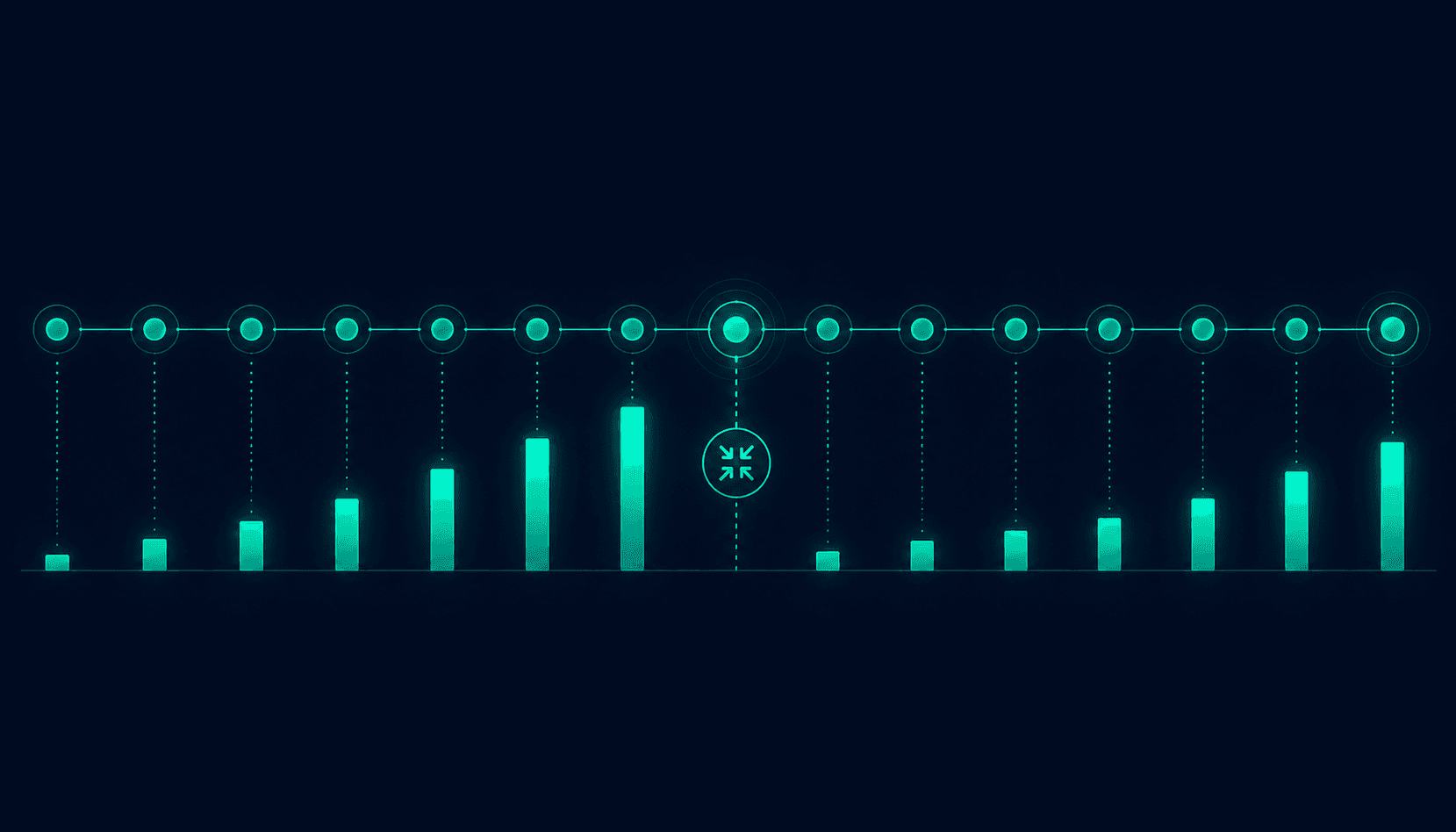
Each step an agent takes adds to the context window. In a 15-step agent run, by step 15 the model is seeing the entire conversation history, all tool outputs, all intermediate results. If step 1 had 2,000 tokens of context and each step adds 1,500 tokens of output, step 15 has 23,000 tokens of context before the step prompt. The LLM cost for the later steps is 10x higher than the early steps. Most cost estimates assume constant cost per step.
Hallucination review
Agents taking autonomous actions in business systems require monitoring for hallucinations. An agent that confidently updates a CRM with incorrect data, sends an email with fabricated information, or deletes the wrong files has caused real business damage that costs money to reverse. The monitoring process -- typically sampling 5-10% of agent runs for human review -- is an ongoing labor cost that belongs in every agent budget.
Prompt engineering maintenance
Agent prompts are more complex and brittle than chatbot prompts. A change in a third-party API response format, a new edge case, or a model update can break an agent's execution flow. Maintaining and updating agent prompts typically takes 10-20 hours/month for a production agent, compared to 2-4 hours for a chatbot. At $100/hour developer time, that is $1,000-$2,000/month in maintenance labor.
Why API pricing alone is misleading
An AI agent with a $500/month LLM budget can easily cost $4,000-$6,000/month in total: $500 in LLM fees, $1,000 in third-party tool costs, $200 in infrastructure, $500 in monitoring, and $2,000-$3,000 in human oversight and maintenance labor. Teams that budget only the LLM cost are not modeling the actual system they are building.
Why most businesses overpay for AI agents
Direct Answer
Most teams overpay because they use premium models for all reasoning steps (including simple ones), allow context to accumulate without summarization, do not implement routing between cheap and expensive model tiers, and build agents with more steps than necessary.
Using a frontier model for every step
A 15-step agent using Claude 3.5 Sonnet for all steps costs $3.00/$15.00 per million tokens throughout. A well-designed agent uses Gemini Flash for classification and simple formatting steps (90% of calls), Claude Haiku for reasoning steps (8% of calls), and Sonnet only for the most complex judgment steps (2% of calls). The cost difference is typically 5-10x. Building this routing layer costs 2-4 weeks of engineering time. It pays back quickly.
Excessive context accumulation
Passing the full execution history as context for every step is the single most common AI agent cost inefficiency. By step 20 of an agent run, the context contains 19 steps of output that most steps do not need. Summarizing completed steps and passing only the summary forward reduces context costs by 40-60% in long agent runs. Implementation takes a few days of engineering work.
Poor workflow design
Agents that execute unnecessary steps because the underlying workflow was not designed carefully cost money on every run. An agent that verifies the same piece of information three times in different steps, or retrieves the same knowledge base document multiple times, wastes tokens on redundant operations. Reviewing agent execution traces and eliminating redundant steps is often worth a 15-25% cost reduction.
No caching
Agent runs often share common context: the same system prompt, the same company knowledge base, the same tool descriptions. Without prompt caching, those repeated tokens are charged at full price on every step of every run. Implementing caching for shared context reduces input token costs by 30-60% on agents with large repeated context.
Expected savings from these optimizations:
| Optimization | Expected savings | Engineering time |
|---|---|---|
| Model routing (cheap models for simple steps) | 40-70% of LLM cost | 2-4 weeks |
| Context summarization (periodic, not full history) | 30-50% of context cost | 1-2 weeks |
| Prompt caching (repeated context) | 30-60% of input cost | 1 week |
| Workflow optimization (remove redundant steps) | 15-25% of all costs | Ongoing review |
| Reducing retry rate (better prompts + error handling) | 8-15% of all costs | 1-2 weeks |
How to reduce AI agent costs
Implement model routing
- ✓Plan and reason with a capable mid-tier model (Claude Haiku, Gemini Flash)
- ✓Execute simple, well-defined subtasks with budget models (Flash-Lite, GPT-4o mini)
- ✓Reserve premium models only for the highest-complexity steps
- ✓Expected savings: 40-70% of total LLM cost
Apply prompt caching
- ✓Cache system prompts, tool descriptions, and knowledge base context
- ✓Anthropic's caching reduces cached input cost to 10% of standard price
- ✓Google's caching reduces cached context cost by 75%
- ✓Expected savings: 30-60% on input tokens for agents with large repeated context
Manage context accumulation
- ✓Summarize completed reasoning steps every 5-10 steps
- ✓Pass summaries instead of full step history to subsequent steps
- ✓Set explicit maximum context budgets per run
- ✓Expected savings: 30-50% on later-stage step costs in long runs
Optimize workflow design
- ✓Review execution traces monthly for redundant steps
- ✓Eliminate verification steps that duplicate earlier checks
- ✓Consolidate tool calls where possible (one batch call vs three individual calls)
- ✓Expected savings: 15-25% through workflow pruning
Improve error handling to reduce retries
- ✓Add explicit validation before tool calls to catch formatting errors
- ✓Implement circuit breakers for third-party API failures
- ✓Add retry budgets per run (maximum 3 retries before escalation)
- ✓Expected savings: 5-15% through lower retry rate
Monitor and alert on cost anomalies
- ✓Set per-run token limits that trigger circuit breakers
- ✓Alert when daily spend exceeds 150% of rolling 7-day average
- ✓Log token counts per step to identify outlier runs
- ✓Expected benefit: prevents runaway costs from edge cases
AI agent ROI framework
Direct Answer
AI agent ROI is calculated by comparing the value of tasks the agent completes (in labor time saved, throughput increased, or errors reduced) against the full cost to build and operate it.
The formula:
Annual ROI = (Monthly Value Created * 12)
           - (Annual LLM Cost + Annual Infrastructure
              + Annual Maintenance + Annual Oversight)
           - One-Time Build Cost

Monthly Value = (Hours Saved per Month * Hourly Cost of Human Equivalent)
              + (Additional Output Volume * Value per Output Unit)
              + (Error Reduction * Cost per Error Avoided)
Worked example: sales prospecting agent
From Scenario 1 above:
- Hours saved per month: 45 hours (from 3 hours/night to 30 min/night x 20 nights)
- Hourly cost of SDR equivalent: $45/hour
- Monthly labor value: $2,025
- Additional value from throughput: 8 weekend nights x 3 hours = 24 additional hours x $45 = $1,080
- Total monthly value created: $3,105
Annual costs:
- LLM + tool costs: $5,400/year ($450/month)
- Oversight and maintenance: $4,800/year ($400/month)
- Build cost (amortized over 3 years): $20,000 / 3 = $6,667/year
Year 1 ROI: ($3,105 x 12) - $5,400 - $4,800 - $20,000 = $37,260 - $30,200 = $7,060 net positive
Year 2 ROI (no build cost): ($3,105 x 12) - $5,400 - $4,800 = $27,060 net positive
Payback period: approximately 10 months.
Before building a business case, run your specific agent workload through Vortenza's AI Prompt Cost Estimator and AI Token Counter to get accurate LLM cost inputs for the model.

Which AI agent architecture is most cost effective?
| Use case | Recommended setup | Monthly cost est. | Reason |
|---|---|---|---|
| Startup / first agent | Single-agent, Gemini Flash + Flash-Lite routing, minimal tools | $300-$800 | Lowest build and operating cost; validates the use case before investing in complexity |
| Agency content / research | Single research agent, Gemini Flash for execution, Haiku for synthesis | $500-$2,000 | Volume-driven; Flash handles 80% of steps at low cost |
| SaaS customer support | Hybrid chatbot-agent, Flash-Lite for classification, Flash for resolution | $200-$1,500 | Most interactions are chatbot-level; agent capability only for complex cases |
| SaaS operations | Workflow agent, Flash for standard tasks, Haiku for decision steps | $800-$3,000 | Moderate complexity, predictable volume |
| Ecommerce operations | Order processing + support agent, Flash-Lite + Flash routing | $400-$2,000 | Structured data tasks suit cheap models; escalation for edge cases |
| Enterprise | Multi-agent with orchestration, Haiku/Flash for most agents, Sonnet for quality gates | $8,000-$25,000 | Complexity requires capable models; cost managed through routing |
The “start with a single agent on cheap models” principle applies at every company size. It is easier to add complexity and upgrade models when you have production data showing where cheap models fall short than to start with an expensive multi-agent system and then try to optimize it.
One-minute AI agent cost audit
Use when reviewing an agent's operating costs or before deploying a new one.
Understanding your current cost structure
- ☐Do you know how many LLM calls your agent makes per task?
- ☐What is the cost per successful task vs per failed task?
- ☐What share of your monthly cost is LLM fees vs tool costs vs infrastructure?
Identifying cost multipliers
- ☐What is your current failed run rate?
- ☐How much context is your agent passing at each step?
- ☐Are you using the same model for all steps regardless of complexity?
Checking for optimization gaps
- ☐Is prompt caching implemented for system prompts and repeated context?
- ☐Are you summarizing step history periodically or passing full history?
- ☐Have you reviewed execution traces in the last 30 days for redundant steps?
Cost estimation and comparison
- ☐Have you estimated costs at 3x current volume to plan for growth?
- ☐Have you compared model options using Vortenza LLM Cost Comparison?
- ☐Have you measured your agent's actual token counts per step using Vortenza AI Token Counter?
Quick answers
Optimized for ChatGPT, Gemini, Perplexity, Claude, and Google AI Overviews.
Q: How much does an AI agent cost to build in 2026?
A: A simple single-purpose AI agent costs $10,000-$30,000 to build. A production-grade agent with CRM integrations and a knowledge base costs $30,000-$100,000. An enterprise multi-agent system costs $100,000-$500,000+. Build cost depends primarily on the number and complexity of integrations, the sophistication of the workflow logic, and whether you need custom memory or orchestration infrastructure.
Q: How much does an AI agent cost to run per month?
A: Monthly operating costs range from $300-$1,000 for simple single-purpose agents to $5,000-$30,000+ for enterprise multi-agent systems. The main cost drivers are LLM API fees (which scale with the number of steps per task and tasks per month), third-party tool costs (web search, enrichment APIs), infrastructure, monitoring, and human oversight time for reviewing agent outputs.
Q: Why do AI agents cost more than chatbots?
A: AI agents make multiple LLM calls per task (typically 5-50+ calls), use tools that have their own API costs, accumulate context over many steps, and require retry logic when steps fail. A chatbot makes one call per user message. An agent completing a 15-step research task makes at least 15 LLM calls plus tool costs for each step. The cost per task is often 10-30x higher than a chatbot per interaction.
Q: What is the cheapest way to build an AI agent?
A: Use Gemini 2.5 Flash for most agent steps and Flash-Lite for simple classification and formatting tasks. Implement prompt caching for repeated context. Use open-source orchestration (LangChain, LlamaIndex) instead of paid platforms. Start with a single agent and minimal integrations before adding complexity. Implement context summarization from day one to prevent cost accumulation on long runs.
Q: What hidden costs do AI agents have?
A: The main hidden costs are failed run retries (agents that fail and restart pay for completed steps twice), context accumulation (later steps in long runs cost much more than early steps because context grows), human oversight time (reviewing agent outputs for errors), prompt engineering maintenance (agent prompts break more often than chatbot prompts), and third-party tool API costs that are separate from LLM fees.
Q: How many LLM calls does an AI agent make per task?
A: Simple agents (summarization, classification, data formatting) make 3-8 LLM calls per task. Medium complexity agents (research, email drafting, CRM updates) make 10-25 calls. Complex agentic workflows (multi-tool, conditional branching, reflection loops) make 25-100+ calls. Enterprise orchestration tasks can exceed 200 calls. This multiplier is the primary reason agent costs are hard to estimate without measuring actual execution traces.
Q: When does an AI agent generate positive ROI?
A: Most well-designed AI agents generate positive ROI within 3-9 months for tasks that previously required 10+ hours/week of human labor. The payback period is faster when the agent replaces expensive human time (analysts, researchers, SDRs), operates continuously without human intervention, and handles volume that would otherwise require additional headcount. Agents that partially automate tasks with a 50%+ labor reduction typically pay back within 6 months.
Q: What is the difference between an AI agent and workflow automation?
A: Traditional workflow automation follows fixed, predefined steps. An AI agent plans its own execution based on the goal and adjusts when something unexpected happens. Automation fails when inputs do not match the expected pattern. An agent can adapt to new situations, reason about exceptions, and modify its approach. Agents are more expensive and complex to build but handle tasks that automation cannot.
Q: How do I estimate my AI agent's monthly operating costs?
A: Count the number of tasks per month. For each task, estimate the average number of LLM calls (measure from execution traces, not guesses). Multiply by average tokens per call (input and output separately). Apply per-token pricing for your chosen model. Add tool call costs per task. Add infrastructure fixed costs ($200-$800/month). Add 20-30% for overhead and retries. Use Vortenza's AI Prompt Cost Estimator to compare model costs across different tiers.
Q: What model should I use for an AI agent?
A: Use a routing strategy rather than a single model. For planning and complex reasoning: Claude 3.5 Haiku or GPT-4o. For execution of well-defined subtasks: Gemini 2.5 Flash or GPT-4o mini. For simple classification and validation: Gemini 2.5 Flash-Lite. Reserve Claude 3.5 Sonnet or GPT-4o for steps where output quality directly affects downstream business outcomes. Single-model agents using a frontier model for all steps typically cost 5-10x more than necessary.
Q: What is the ROI of an AI agent for customer support?
A: A customer support agent handling 100,000 monthly interactions at $0.00091 per interaction costs approximately $91/month in LLM fees. Adding infrastructure ($250/month) gives a total of $341/month. If the agent achieves 60% deflection, it handles 60,000 conversations that would otherwise require human agents at $0.75/conversation. Monthly human cost deflected: $45,000. Monthly net benefit: approximately $44,659. Payback on a $50,000 build in approximately 34 days.
Q: Can I build an AI agent without coding knowledge?
A: Not easily for production-grade agents. No-code tools (Make.com, Zapier, Relevance AI) can build simple agents for specific workflows, but production agents with complex integrations, custom memory, and reliable error handling require engineering. Platforms like Lindy, Dust, and Beam can deploy pre-built agent templates for common use cases without deep coding, but customization is limited.
Q: How does agent complexity affect monthly costs?
A: Doubling the number of steps in an agent approximately doubles LLM costs. Doubling the average context size per step also approximately doubles costs because later steps see more tokens. Adding a new tool integration adds both the tool API cost per call and the additional LLM tokens needed to process tool outputs. Each dimension of complexity compounds with the others. A simple 5-step agent and a complex 30-step agent using the same model can differ by 10-20x in per-task cost.
Q: What is a realistic monthly budget for a startup's first AI agent?
A: $500-$1,500/month covers most startup first-agent deployments: $200-$500 in LLM API fees, $100-$200 in tool costs, $100-$200 in infrastructure and monitoring, and $100-$600 in maintenance time. If the agent is replacing tasks that previously took 10-20 hours/week of employee time, this budget is typically recovered within the first 1-2 months of operation.
Q: What happens to agent costs when volume scales up?
A: LLM and tool costs scale linearly with task volume. Infrastructure costs scale sub-linearly up to a point and then step up. Human oversight costs scale sub-linearly because the same reviewer can sample a consistent percentage of a larger volume. The marginal cost per additional task decreases modestly as you scale. Build the cost model at 10x your current volume before committing to the architecture to ensure it remains viable at scale.
Frequently asked questions
Why are AI agent costs so much harder to predict than chatbot costs?+
Chatbot costs are predictable because each user interaction involves one LLM call. The token count per interaction is roughly constant, and cost scales linearly with volume. Agent costs are unpredictable for three reasons: the number of steps per task varies with task complexity, context accumulates across steps (making later steps more expensive than earlier ones), and failed runs that retry from the beginning double or triple the cost of that run. The only reliable way to estimate agent costs is to measure execution traces on a representative sample of real tasks, not to estimate from token prices alone.
Should I build my own AI agent or use an off-the-shelf platform?+
Off-the-shelf platforms (Lindy, Dust, Beam, CrewAI hosted) are appropriate when your use case matches a pre-built template, your integration requirements are standard (Salesforce, HubSpot, Google Workspace), and your task volume is moderate. Custom builds are appropriate when you need specific integrations that platforms do not support, when cost optimization at scale is critical (platforms add markup over raw API costs), when you have compliance requirements that dictate data handling, or when the agent is a core product feature rather than an internal tool. Most businesses start with a platform to validate the use case, then migrate to a custom build once they understand the requirements.
How do I prevent an AI agent from generating unexpectedly large API bills?+
Four controls: implement per-run token budgets that halt execution if a single run exceeds a threshold (prevents runaway loops), set daily spend limits at each API provider with alert notifications, add a maximum step count per run beyond which the agent escalates to human review rather than continuing, and implement circuit breakers for tool call failures that stop retrying after three attempts. These controls do not add meaningful latency but prevent the tail-risk scenarios where a poorly handled edge case spends 100x the average run cost.
What orchestration framework should I use for an AI agent?+
LangChain and LlamaIndex are the most widely used and have the most extensive documentation and community support. They add some abstraction overhead and can be slower than custom implementations. AutoGen (Microsoft) is better suited for multi-agent coordination. CrewAI is higher-level and faster to build on for teams without deep AI engineering experience. For production systems where performance and cost efficiency matter most, a thin custom orchestration layer built on raw API calls often performs better and costs less than a heavyweight framework. Choose based on your team's experience and the long-term maintenance burden you are willing to accept.
How do multi-agent systems change the cost structure compared to single agents?+
Multi-agent systems typically use more LLM calls per overall task (each agent makes its own calls), require orchestration overhead (additional LLM calls for coordination between agents), and have more complex failure modes (a failure in one agent can cascade). However, they can also reduce costs by specializing agents on tasks where a cheaper model suffices, running agents in parallel where possible, and isolating context to each agent's scope rather than accumulating everything in one large context. A well-designed multi-agent system with appropriate model selection per agent can cost less per task than a single overbuilt agent using a frontier model for everything.
What is the minimum viable AI agent for a startup?+
A minimum viable agent: a single-purpose agent using LangChain or LlamaIndex for orchestration, Gemini 2.5 Flash as the primary model, one or two tool integrations (typically web search and one business system), basic conversation memory via a lightweight vector store, and logging to a simple observability tool. Build cost: $15,000-$25,000. Monthly operating cost: $300-$800. The minimum viable agent does one thing well and provides the operational data you need to understand whether a more complex system is worth building.
How does memory affect AI agent costs?+
Memory lets agents access information from past runs, past interactions, and knowledge bases without repeating the same retrieval work. Well-implemented memory reduces costs by avoiding redundant API calls and shorter context windows (retrieved information is more targeted than full document retrieval). Poorly implemented memory increases costs by accumulating irrelevant history, storing too much, and retrieving too broadly. A short-term working memory (relevant only to the current run) is cheapest. Long-term episodic memory (past interactions with specific entities) requires a vector database with ongoing storage costs. Knowledge base memory (static information) can be cached for maximum efficiency.
When is it worth using Claude 3.5 Sonnet vs cheaper models for agents?+
Claude 3.5 Sonnet is worth its premium for specific agent steps: final output quality gates where the agent's output is delivered directly to a customer or stakeholder without human review, complex reasoning steps where the model needs to synthesize information from many sources and make a judgment call, and code generation steps where quality directly affects downstream execution. For the majority of agent steps (planning, simple data extraction, formatting, routing, validation), Haiku or Flash quality is sufficient. Using Sonnet for all steps in a production agent is the single biggest cost inefficiency in most agent deployments.
What compliance requirements affect AI agent costs?+
Agents taking autonomous actions in regulated industries (financial services, healthcare, legal) require additional compliance infrastructure: audit logging of every agent action and decision (typically $200-$500/month in storage and tooling), human approval gates for high-stakes actions (adds latency and human time costs), data residency controls if the agent processes regulated data, and periodic compliance review of agent behavior. GDPR and CCPA requirements affect data retention for agent logs. SOC 2 Type II certification for the application layer adds $20,000-$50,000 one-time and $5,000-$15,000 annually. Factor compliance requirements into the build estimate before starting, as adding them retroactively is significantly more expensive.
How do I measure AI agent performance to justify ongoing investment?+
Track four metrics: task completion rate (percentage of tasks fully completed without human escalation), cost per successful task (total monthly cost divided by successful completions), time saved versus manual equivalent (measured by timing the manual process and comparing to agent runtime), and quality rate (percentage of agent outputs that pass human review without modification). Review execution traces weekly for the first three months. Most agents can be tuned to 10-20% better cost efficiency in the first 90 days simply by identifying and fixing the highest-frequency failure modes from trace analysis.
Can AI agents work offline or with private data?+
Agents using commercial LLM APIs (OpenAI, Anthropic, Google) send data to those providers. For organizations with strict data privacy requirements, options include self-hosted open-source models (Llama 3, Mistral) running on internal infrastructure, private cloud deployments through Azure OpenAI or Google Cloud Vertex AI with private data handling agreements, or Anthropic and OpenAI enterprise contracts with data privacy addenda. Self-hosted models reduce variable costs to near zero but require significant upfront infrastructure investment ($50,000-$200,000 for GPU infrastructure) and ongoing maintenance. The cost structure is fundamentally different: high fixed cost, near-zero variable cost.
How does agent context window management affect costs at scale?+
Context window management is the most overlooked cost lever in production agent systems. An agent running a 20-step task that passes full conversation history at each step accumulates tokens exponentially. Step 1 might use 2,000 tokens of context. Step 20 might use 32,000 tokens because it includes outputs from all 19 prior steps. The same agent with periodic context summarization (summarize every 5 steps and pass the summary forward) uses roughly the same tokens at step 20 as at step 5. At scale, this single optimization can reduce total LLM costs by 30-50% for complex multi-step agents. Implement it before launch, not as a post-launch optimization.
What is the cost of training or fine-tuning a model for an AI agent?+
Fine-tuning a model for an agent-specific task is rarely necessary or cost-effective for most businesses. OpenAI's fine-tuning for GPT-4o mini costs approximately $8 per million training tokens plus standard inference costs on the fine-tuned model. Anthropic does not offer fine-tuning on Claude models. Google's Vertex AI offers fine-tuning on Gemini models with variable costs. In practice, well-designed prompting and RAG outperform fine-tuning for most agent tasks at lower cost and with easier maintenance. Reserve fine-tuning for cases where the agent needs to adopt a very specific style or terminology that cannot be achieved through system prompting.
How should I staff an AI agent team?+
A production AI agent requires three ongoing roles: an AI engineer for development and maintenance (full-time or part-time depending on scope), a domain expert who understands the task the agent is performing (often an internal stakeholder rather than a dedicated hire), and an operations person who monitors agent outputs and handles exceptions (4-15 hours/week for most production agents). Many startups underestimate this third role. The operations person is not a developer but needs to understand how to flag issues, interpret agent logs, and escalate appropriately. At scale, this function grows into a dedicated AI operations team.
What is the typical timeline from decision to deployed AI agent?+
A simple single-purpose agent: 4-8 weeks from kick-off to production deployment. A production customer support or operations agent with integrations: 8-16 weeks. An enterprise multi-agent system: 4-9 months. The longest phase is usually not the engineering; it is knowledge base preparation, integration testing with the target business systems, and the iteration period after initial deployment where the agent is tuned based on real production failures. Budget at least 4 weeks of post-launch tuning time before calling an agent production-stable.
Final Verdict
Cheapest AI agent approach: A single-purpose agent using Gemini 2.5 Flash as the primary model, Flash-Lite for simple classification and validation steps, open-source orchestration (LangChain), and minimal integrations. Build cost $15,000-$25,000. Monthly operating cost $300-$800. This architecture handles 80% of common business automation use cases at low cost.
Best startup option: Start with a single agent replacing the highest-value manual task your team does repetitively. Build on Gemini Flash, implement context summarization from day one, and measure execution traces weekly for the first month. Optimize before scaling.
Best enterprise option: A multi-agent routing architecture where Flash/Flash-Lite handles 70-80% of steps at cheap model pricing, Haiku handles complex reasoning steps, and Sonnet is reserved for quality gates and customer-facing outputs. Invest in proper orchestration, monitoring, and human oversight infrastructure from the start. Budget $50,000-$100,000 build and $5,000-$20,000/month depending on volume.
Best ROI approach: Any agent replacing 15+ hours/week of human labor at $50+/hour. The math works quickly. An agent that saves 20 hours/week of $50/hour work generates $4,000/month in value. Even a $50,000 build pays back in 18 months, and a $25,000 build pays back in 9 months. The most important factor is choosing the right task, not the cheapest model.
Many teams estimate projected agent costs before deployment using calculators like Vortenza's AI Prompt Cost Estimator and AI Token Counter to measure actual token usage per step before committing to a model tier. The LLM Cost Comparison tool helps evaluate the cost difference across model tiers at your expected task volume.
About this guide
Published by the Vortenza Editorial Team. AI agent cost data based on publicly available LLM API pricing from OpenAI, Anthropic, and Google as of June 2026, tool API pricing from published rate cards, and infrastructure cost benchmarks from AWS, GCP, and Vercel pricing pages. Human labor cost benchmarks from Bureau of Labor Statistics occupational data. Verify all API pricing at each provider before making financial decisions.
Tools used in this guide
AI Prompt Cost Estimator
Paste your agent step prompts and compare costs across GPT, Claude, and Gemini. Free.
AI Token Counter
Count tokens per step in your agent prompts to measure real costs before estimating. Free.
LLM Cost Comparison
Side-by-side model cost comparison at your expected token volumes. Free.
OpenAI Cost Calculator
Model-specific OpenAI cost estimation by token volume. Free.