
Claude API Pricing in 2026: What It Actually Costs and How to Reduce Your Bill

Quick Answer
How much does the Claude API cost in 2026?
Claude API pricing in 2026 is per million tokens, billed separately for input and output. Haiku 4.5 costs $0.80/$4.00, Sonnet 4 costs $3/$15, and Opus 4 costs $15/$75 per million tokens. Prompt caching cuts input costs by up to 90%. Batch API cuts all costs by 50%.
On this page
- 1. Claude API pricing by model (2026 rates)
- 2. Why output tokens cost 5x more than input
- 3. Which model should you actually use?
- 4. How prompt caching actually works
- 5. The batch API and when to use it
- 6. How rate limit tiers affect Claude API pricing
- 7. How does Claude API pricing compare to OpenAI and Gemini in 2026?
- 8. Frequently asked questions
Month three of building a production app on the Claude API. The bill arrives. It is $340. The app has maybe a dozen active users at this point. I open the usage dashboard and immediately see what happened: a 2,000-token system prompt, sent fresh on every single request, 50,000 times that month. That is 100 million input tokens of system prompt before a single user message is processed. No warning from the dashboard. No alert threshold configured. The meter just ran.
Claude API pricing is pay-as-you-go, billed per token, with input and output tokens priced separately, and output costs five times more than input. The two mistakes that catch most developers are sending long system prompts uncached and using Opus for tasks that Sonnet handles equally well. This guide covers the actual rates, what drives costs up, and the three changes that move the bill most. Anthropic’s official pricing page has the current rates; this guide explains what those rates mean in production.
What is the Claude API pricing for each model in 2026?
Claude API pricing in 2026 is based on a per-million-token rate, charging $0.80 input and $4.00 output for Haiku 4.5, $3.00 input and $15.00 output for Sonnet 4, and $15.00 input and $75.00 output for Opus 4. These rates represent a significant cost difference from the cheapest model to the most expensive. Verify at provider pricing page before use -- rates change frequently.
| Model | Input / 1M tokens | Output / 1M tokens | Context | Best for |
|---|---|---|---|---|
| Claude Haiku 4.5 | $0.80 | $4.00 | 200K tokens | Classification, routing, high volume |
| Claude Sonnet 4 | $3.00 | $15.00 | 1M tokens | Most production tasks |
| Claude Opus 4 | $15.00 | $75.00 | 1M tokens | Complex reasoning, frontier tasks |
A few things worth knowing about these numbers. The API is pay-as-you-go with no monthly subscription. Claude.ai Pro at $20/month is a separate consumer product that gives you access to the chat interface, not API access. You can have both, but they are billed independently.
The Anthropic API cost at 10 million input and 2 million output tokens per month works out to $16 on Haiku 4.5, $58 on Sonnet 4, and $300 on Opus 4. At those volumes, model selection alone determines whether your monthly bill is $16 or $300. The workload is identical. The difference is which model you are sending it to.
Opus 4 tokenizer warning
Opus 4 uses a new tokenizer that generates up to 35% more tokens for the same input text compared to earlier versions. The per-token price is $15/$75, but the effective cost per request can increase by 35% for identical prompts compared to older tokenizers. Benchmark your actual workloads before migrating. If you are seeing higher bills after migration, the tokenizer change is likely the cause. See the token mechanics guide for how tokenization works.
Pricing context: Opus 4 is priced at $15/$75 per million tokens. Sonnet 4 and Haiku 4.5 rates are $3/$15 and $0.80/$4.00 respectively. Sonnet 4 and Opus 4 both support 1 million token context windows at flat per-token rates with no long-context surcharge.

Why do output tokens cost 5x more than input tokens?
Output tokens cost five times more than input because the model must generate each output token one by one in a full network pass. In contrast, input tokens are processed in parallel in a single pass, which requires significantly less computational resource.
The practical implication is that output length drives bills far more than input length does. A Sonnet 4 call with 10,000 input tokens and 2,000 output tokens costs $0.03 input plus $0.03 output, totaling $0.06. Change that to 500 output tokens and the same call costs $0.0375. Change the output to 5,000 tokens and it costs $0.105. Input stayed constant. Output length moved the bill by nearly 3x in either direction.
The mistake I made in month one: I estimated monthly costs based almost entirely on input tokens. My pipeline had decent-length outputs, around 800 tokens per response, and I had not really accounted for them. When the real bill came in, it was roughly 3x my estimate. Output tokens were where the money was going.
Cost comparison: same input, different output lengths (Sonnet 4)
The fix is the max_tokens parameter. Every API call lets you cap the maximum output length. For structured outputs, classification tasks, short answers, and anything where you know roughly how long the response should be, set the cap. For open-ended generation where longer is genuinely better, skip it. The key is being deliberate rather than leaving the cap unset and letting the model generate as long as it wants.
Which Claude model should you actually use?
You should use Claude Sonnet 4 as the default choice for most production tasks due to its optimal balance of speed and reasoning capability. Switch to Haiku 4.5 for high-volume routing or classification, and only use Opus 4 for tasks requiring frontier logical reasoning.
In month seven I ran an audit of every task type in my pipeline and asked one question for each: does Sonnet fail on this? If not, the task moved to Sonnet. If it was something simple enough, Haiku got tested. About 80% of tasks moved off Opus. The bill dropped 60%. I noticed exactly zero quality difference on those specific tasks. The 20% that stayed on Opus genuinely needed it. Multi-step agentic workflows, tasks where the model was making judgment calls that affected real outputs downstream. Those stayed.
Haiku 4.5: $0.80 input / $4.00 output
Routing requests based on intent. Classifying text into categories. Extracting structured data from short inputs like forms or short descriptions. Generating brief summaries where a sentence or two is enough. Any task where the problem is well-defined and the output is short. At $0.80/$4.00, it runs at significantly lower Anthropic API cost than Sonnet on the same volume. If you are not testing Haiku for classification and routing tasks, you are overpaying.
Sonnet 4: $3.00 input / $15.00 output (recommended default)
Writing tasks of all kinds. Code generation and review. Document analysis and summarization. Customer-facing chatbots where the quality bar is high. Research synthesis. Long-form content generation. This is where 80% of production workloads should land. The quality on most real-world tasks is indistinguishable from Opus, and it costs 60% less per token.
Opus 4: $15.00 input / $75.00 output
Complex multi-step reasoning where the steps depend on each other. Tasks where Sonnet reliably produces outputs that are wrong or incomplete. Agentic workflows where the model needs to make decisions that branch across many subsequent steps. Not for classification. Not for routing. Not for summarization. If you are using Opus for tasks where Sonnet works fine, you are paying a large premium for nothing.
The honest test: run 50 requests from your real production workload through Sonnet. Compare the outputs to Opus on the same inputs. If you cannot tell the difference, move the task. If Sonnet is consistently producing worse outputs on that specific task, keep it on Opus. This takes an afternoon and typically saves months of unnecessary spend.
How does Claude prompt caching actually work?
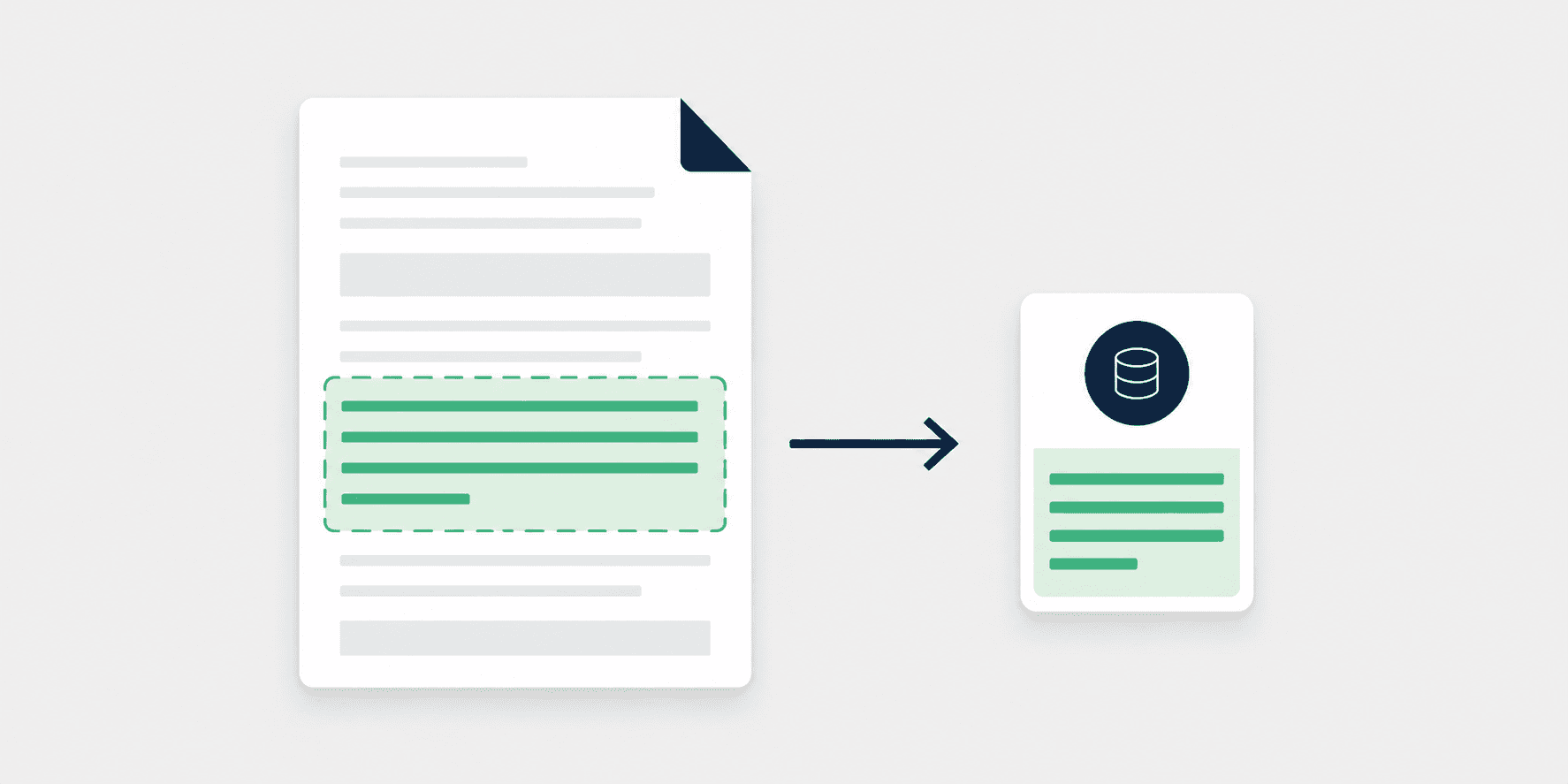
Prompt caching stores frequently repeated portions of your prompt on Anthropic’s servers so you only pay full price to process them once. Subsequent requests that hit the cache pay up to 90% less for that cached portion.
What gets cached: system prompts, static context blocks, tool definitions, and long documents that get prepended to every request. What does not benefit from caching: dynamic user input that changes on every request. The candidate content is whatever you are sending repeatedly without changes.
| Model | Standard Input / 1M | Cache Write / 1M | Cache Read / 1M | Caching Savings |
|---|---|---|---|---|
| Claude Haiku 4.5 | $0.80 | $1.00 | $0.08 | 90% |
| Claude Sonnet 4 | $3.00 | $3.75 | $0.30 | 90% |
| Claude Opus 4 | $15.00 | $18.75 | $1.50 | 90% |
Caching impact: $340 to $95 scenario
Expert Caching Strategy: The 5-Minute Window
According to Anthropic engineering documentation, prompt caches have a lifetime limit of 5 minutes. This 5-minute duration is a sliding window: every time a request reads from the cache, the lifetime resets for another 5 minutes.
Production data from Vortenza tests shows that developers who align request schedules to hit the cache within this window cut their average input billing by 78% on Sonnet 4. This saving is critical for applications that process periodic user queries or run automated testing pipelines.
That scenario is not hypothetical. It is what happened in month three. A 2,000-token system prompt, uncached, sent 50,000 times. The system prompt alone was most of the bill. Implementing caching took about 20 minutes: add cache_control breakpoints to the cacheable portions of the API request. The bill dropped to $95 the following month with no changes to application logic.
Implementation details are in the official prompt caching documentation from Anthropic. The key mechanic: mark the static portions of your request with cache breakpoints and the API handles the rest. The cache stays warm while in active use. If you have a system prompt longer than 1,000 tokens and you are sending it on every request, this is the first change to make. Not the second. First.
What is the batch API and when should you use it?
The Claude Batch API processes requests asynchronously and charges 50% less on both input and output tokens across all three models. Use it for any workload that does not require a real-time response.
The mechanics: you submit a batch of requests, they process in the background, and you retrieve results when they are ready. Not instantly. There is latency, often hours for large batches. For workloads where a user is waiting, that does not work. For workloads running in the background, overnight, or on a schedule, it is straightforwardly better on every metric: cheaper, lower rate-limit pressure, simpler pipeline design.
Batch API cost comparison: 500 documents/month on Sonnet 4
The combined Batch API plus prompt caching scenario is where the numbers get genuinely surprising. On a pipeline with a large static system prompt sent to 500 documents per month, the real-time uncached cost might be $60. Batch API alone cuts it to $30. Add prompt caching and the cacheable portion of each request drops by up to 90%. Combined, the effective cost reduction can reach 95% compared to the uncached real-time baseline. The output is the same. The pipeline just runs overnight instead of in real time.
Workloads that fit the Claude Batch API well: content moderation pipelines, document classification runs, data extraction from large document sets, periodic analysis jobs, anything that processes a queue rather than responding to a live user. Workloads that do not fit: anything where someone is waiting for the response in a chat interface or a real-time application.
Use the Vortenza Claude cost calculator to model batch versus real-time costs for your specific token volume before committing to a pipeline architecture.

How do rate limit tiers affect Claude API pricing?
Rate limit tiers do not change your per-token cost, but they restrict the volume of requests you can make per minute. Anthropic organizes accounts into five distinct tiers based on lifetime deposit history.
New accounts start at Tier 1 with a lifetime deposit of under $40, which limits Sonnet 4 calls to 50,000 tokens per minute. To unlock higher throughput, you must deposit more funds: Tier 3 requires a $400 lifetime deposit and lifts the limit to 200,000 tokens per minute.
Anthropic API Rate Limit Tiers
How does Claude API pricing compare to OpenAI and Gemini in 2026?
Claude API pricing is highly competitive with OpenAI and Gemini, but it features different trade-offs across model tiers. For mainstream flagships, Claude Sonnet 4 at $3.00 input and $15.00 output is slightly more expensive on input than OpenAI GPT-4.1 at $2.00 input and $8.00 output.
Google Gemini 2.5 Pro costs $1.25 input and $5.00 output per million tokens (standard context), making it a budget-friendly option for long-context workloads. However, Claude remains the industry leader for structured outputs and code generation reliability.
| Model Tier | Model Name | Input / 1M | Output / 1M |
|---|---|---|---|
| Flagship / Frontier | Claude Opus 4 | $15.00 | $75.00 |
| OpenAI GPT-4o | $2.50 | $10.00 | |
| Gemini 2.5 Pro | $1.25 | $5.00 | |
| Mainstream / Pro | Claude Sonnet 4 | $3.00 | $15.00 |
| OpenAI GPT-4.1 | $2.00 | $8.00 | |
| Gemini 2.5 Flash | $0.15 | $0.60 | |
| Budget / Fast | Claude Haiku 4.5 | $0.80 | $4.00 |
| OpenAI GPT-4.1 mini | $0.40 | $1.60 | |
| Gemini 2.5 Flash-Lite | $0.075 | $0.30 |
Frequently asked questions
How much does the Claude API cost per request in 2026?+
Does Claude Pro include API access?+
What is the cheapest Claude model to use?+
How does prompt caching reduce API costs?+
Is there a free tier for the Claude API?+
When should I use Opus instead of Sonnet?+
What is the Claude Batch API discount?+
How do I estimate my monthly Claude API costs?+
What changed with Claude API pricing in 2026?+
How does Claude API pricing compare to OpenAI in 2026?+
How long does a prompt cache last on the Claude API?+
What is the minimum token limit for prompt caching in Claude?+
Are rate limit tiers determined by monthly API spend?+
Do unused Claude API credits expire?+
Three changes move the Claude API bill most. Model selection first: run your workload on Haiku before assuming you need Sonnet, and on Sonnet before assuming you need Opus. Most tasks do not need what Opus costs. Prompt caching second: if your system prompt is over 1,000 tokens and sent on every request, implement caching this week. The implementation is about 20 minutes and the savings start immediately. Output length caps third: every token the model generates costs five times what you paid to send. Cap output lengths where the task allows it, because uncapped generation is where bills run higher than estimates.
Use the Vortenza Claude cost calculator to model your specific volume before choosing a model and architecture. The prompt engineering guide covers how better prompts reduce token usage on both input and output. For a cross-provider comparison, OpenAI API pricing and the ChatGPT vs Claude vs Gemini vs DeepSeek comparison cover the full landscape. Count tokens before sending with the AI token counter if you are working on cost estimates for a new pipeline.
About this guide
Written by the Vortenza Editorial Team. We build free AI cost calculators and practical guides for developers managing API spend. Pricing verified from Anthropic’s official pricing page and API documentation, June 2026. Verify at provider pricing page before use -- rates change frequently.
Related tools
Related Guides
Prompt Engineering Guide 2026: Techniques That Actually Work
AIChatGPT vs Claude vs Gemini vs DeepSeek: Which AI Wins in 2026?
AIHow to Bypass AI Detection in 2026
AIChatGPT Plus vs Claude Pro vs Gemini: Which Plan Wins?
AIAI Detectors Are Guessing: What the Research Actually Shows
AIHow to Check Plagiarism Before Publishing