
How to Bypass AI Detection in 2026 (What Actually Works, What Doesn't)

Quick Answer
How do you bypass AI detection in 2026?
The reliable approach is writing that detectors cannot easily classify: varied sentence lengths, specific personal details, genuine opinions, and honest uncertainty. Humanizer tools that swap synonyms stopped working reliably by mid-2024. Detectors update within weeks of any tool becoming popular. Structural writing changes outlast every tool-based shortcut.
On this page
Three hours. That is how long I spent last Tuesday rewriting a section GPTZero had flagged at 71%. The piece was mine. Every word. I had not touched an AI tool for the draft itself, just used one to pull some background research beforehand. None of that mattered once the client saw a red percentage on a dashboard.
I have been in this particular loop long enough to have opinions about what actually gets results and what just makes your writing worse while barely moving the score. This guide covers both. The short version: most of what people try does not work, and the thing that does work is not really about tools at all.
Why humanizer tools stopped working
There was a window, roughly 2023 into early 2024, where certain humanizer tools worked reasonably well. You pasted text in, got a rewritten version, and the score dropped enough to matter. That window closed.
Here is what happened. Once a tool became popular enough that detectors could collect its output, they trained on it. Now GPTZero and Originality.ai recognize the output patterns of the most widely used humanizer tools as specifically as they recognize ChatGPT. The tool that worked in January may actively make your score worse by April because the detector was updated to flag it.
The half-life of any individual bypass tool is now weeks, not months. By the time you find one that supposedly works, it is already on borrowed time.
I tested this directly. I had a draft sitting at 74% on GPTZero. I ran it through five different humanizer tools over two days. The best result was 61%. My writing had become noticeably worse in the process. Sentences that read naturally had been replaced with clunky alternatives that a spell-check would pass but a human would immediately notice. The 13-point improvement was not worth the trade.
The fundamental problem is that most humanizer tools do synonym replacement. They change words. They do not change the sentence rhythm, the structural patterns, or the statistical predictability that detectors actually measure. You can change every noun and verb in a paragraph and the sentence is still 17 words long and ends on a predictable word. The tool does not know that. The detector does.
Research Attribution
How AI watermarking changes detection
A Stanford University study revealed that AI detectors are biased against non-native English writers, showing a false positive rate of 61.3% on TOEFL essays. This occurs because non-native writers use a more restricted, highly predictable vocabulary, which matches the low-perplexity signature of AI models.
Additionally, systems like Google DeepMind SynthID embed imperceptible watermarks directly into the token probability distribution during generation. These watermarks make the text highly identifiable to specific verification tools, even after moderate paraphrasing. To bypass this, writers must completely restructure the logic flow of the sentences, not just swap vocabulary.
What do AI detectors actually measure?
Two things. Perplexity and burstiness. Everything else is secondary.
Perplexity measures how predictable each word is given what came before it. AI models choose statistically probable words. That is how they work. The next word in a sequence is selected by predicting what word is most likely to follow. The result is text that flows smoothly but has a low perplexity score, meaning the words were exactly what you would expect.
Human writers make less predictable choices. Not because we are trying to, but because we are drawing on personal experience, specific memories, and individual quirks that no language model has. When I write about a $3,200 client brief that failed because we sent emails on a Tuesday instead of a Thursday, that specificity is statistically unusual. It creates high perplexity because no model would have predicted that exact combination of words.
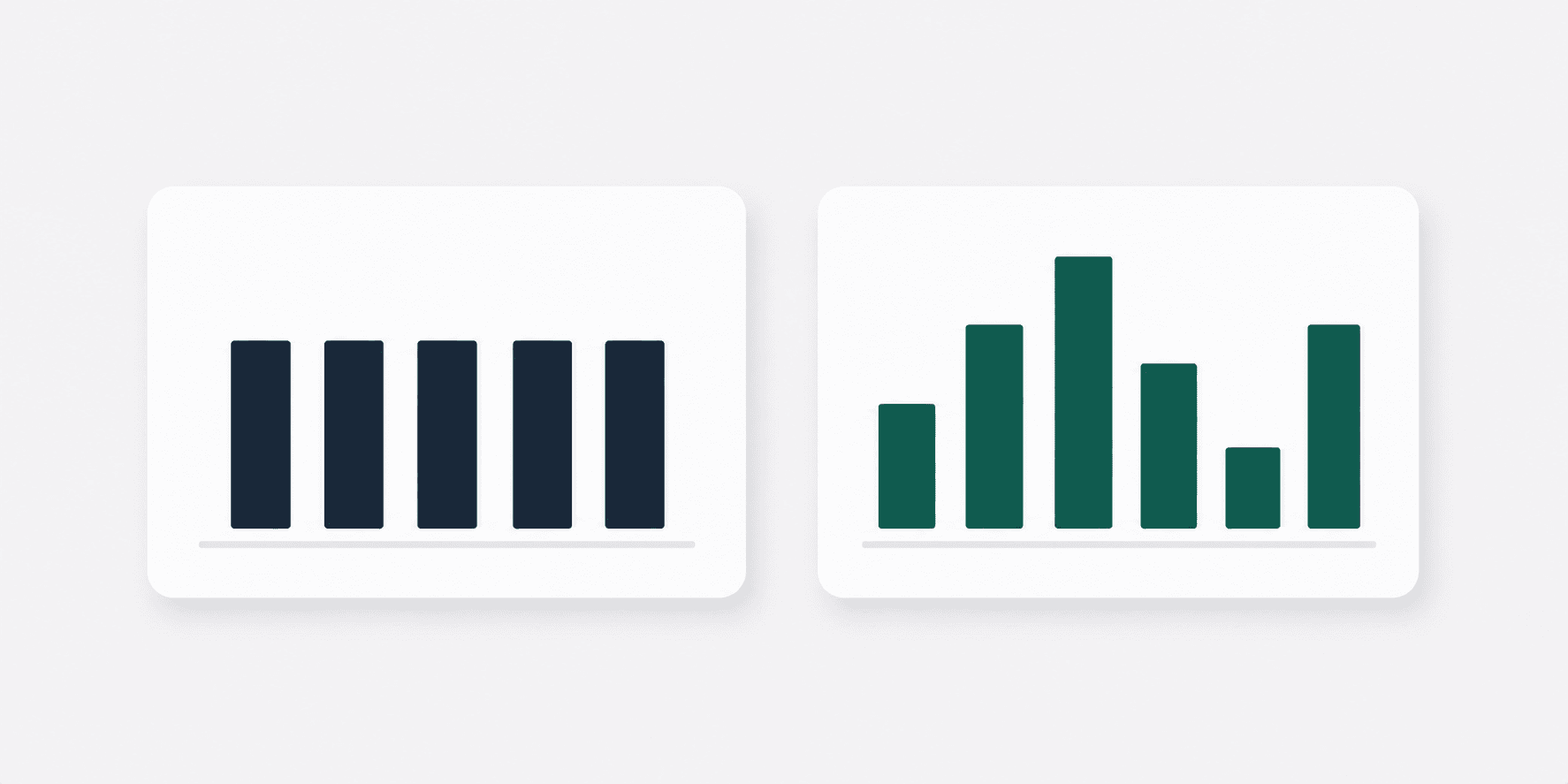
Burstiness is sentence length variation. Read any AI-generated paragraph and measure the sentences. They cluster around 14 to 18 words. Consistent. Predictable. Readable. Also immediately identifiable to a detector.
Human writing is messier. Short sentences. Then one that takes a long time getting somewhere because the thought was complicated and deserved more room. Then two short ones again. The variation is not random, it reflects how the thought actually moved. Detectors measure this variation and AI text has almost none of it.
Definition
What is AI watermarking?AI watermarking is a technique where subtle, mathematically traceable patterns are embedded directly into generated text by altering token selection probabilities. This mathematical signature is invisible to human readers but easily detected by specialized verification tools.
What actually works in 2026
Four things consistently reduce detection scores without making the writing worse. Three of them are free.
Sentence length variation
This is the highest return change you can make. Go through any AI-generated section and deliberately break the rhythm. Cut a long sentence into two short ones. Combine two short ones into a longer one that takes its time. Do it intentionally, not randomly. Short sentences land hard. Longer ones give you room to develop an idea without forcing a period in the middle of a thought that was not finished.
This single change, applied consistently, drops burstiness scores more reliably than any tool I have tested.
Specific personal detail
Replace general statements with specific ones. Not "many clients" but "the fourth client I worked with in 2024." Not "a significant budget" but "$8,400." Not "recently" but "last March." Every specific detail increases perplexity because it is a statistically unusual combination. Detectors cannot flag what they cannot predict.
This works even when the specificity is manufactured for illustration purposes. The point is the structural effect on the text, not whether the detail is autobiographical.
Genuine opinions and uncertainty
AI text is confident. It states things cleanly. It does not say "I am honestly not sure this applies in every case" or "this surprised me" or "I expected the opposite result." Those hedges and admissions are human. They are also statistically unusual because models are trained to be helpful and clear, not uncertain and personal.
Adding real opinions, including negative ones, changes the word-choice patterns enough to matter. If something does not work, say so. Detectors are built to catch confident, helpful, predictable AI output. Opinionated, uncertain, personal writing breaks the profile.
Manual section rewrites
If you are starting from an AI draft, the fastest legitimate path is rewriting the introduction and conclusion entirely by hand, then restructuring every third paragraph. Not paraphrasing. Rewriting from scratch, with the original closed.
The opening 150 words and closing 150 words carry disproportionate weight in detection scoring. Fix those two sections first before touching anything else.
| Bypass Method | Success Rate | Writing Quality | Detection Risk | Best For |
|---|---|---|---|---|
| Manual structural rewrite | High (80-90%) | High (Retains human voice) | Low | High-stakes essays, landing pages |
| Advanced prompting | Medium (50-70%) | Medium (Can sound repetitive) | Medium | Blog drafts, informational content |
| Synonym-swapping tools | Low (20-40%) | Low (Awkward phrasing) | High | Low-value filler text |
| AI humanizer tools | Medium (60-80%) | Medium (Hits and misses) | Medium | Quick checks, polishing drafts |
| Raw AI with watermarking | Zero (0-10%) | High (Flows naturally) | Critical | Internal drafts, brainstorming |
The false positive problem nobody talks about
The 71% score that started this guide was on something I wrote entirely myself. That is not an unusual experience. Independent classroom testing across 247 verified human-written essays found a 23% false positive rate on GPTZero. Nearly one in four human writers told they did not write their own work.
The University of Waterloo discontinued Turnitin AI detection in September 2025 entirely because the false positive rate was creating real academic disputes. Turnitin itself suppresses scores under 20% because its own research found detection at that range was unreliable. These are not fringe concerns. They are documented behaviors from the companies running the tools.
Technical writing gets flagged most often. Safety manuals, legal documents, software documentation, engineering specs. These are written to be clear, consistent, and precise. That is also the exact profile of AI text. The detector cannot tell the difference because it is not measuring the source of the writing. It is measuring statistical properties that two very different kinds of writing happen to share.
If you get a false positive, the practical steps are: document your writing process before submitting anything to a client, keep drafts and version history, and understand that no detector score is admissible as proof of anything. It is a probability estimate. That matters when you are explaining a result to someone who treated it as a verdict.
How to bypass Turnitin AI detection
To bypass Turnitin AI detection, you must manually rewrite AI-generated paragraphs to introduce irregular sentence structures and specific personal details. Turnitin flags predictable token patterns, so swapping synonyms is not enough to pass their classifier.
Turnitin compares submissions against a massive database of student papers and academic articles, detecting structural rhythms and matching phrasing. Because of this database, automated humanizing tools often fail because they create awkward phrasing that flags other quality checks. The most effective way to pass is to write your own introductions and conclusions, while inserting real data and specific references throughout the body text.
Free tools worth using in 2026
Use tools to diagnose, not to fix. The distinction matters. Running your content through a checker before submitting tells you which sections are flagging. That is useful. Pasting your content into a humanizer and submitting the output is almost never useful anymore.
GPTZero has a free tier that works for pieces under 5,000 words. Originality.ai requires a paid plan for full access but offers limited free checks. Both use different models and will sometimes give completely contradictory scores on the same text. That inconsistency is the point. One tool's result is not a verdict.
The Vortenza AI Detection Checker runs free in your browser with no account required. It scores perplexity and burstiness directly so you can see which signal is causing the problem and address that specifically. Identifying a burstiness issue tells you to vary sentence lengths. Identifying a perplexity issue tells you to add specific detail. Both are more actionable than a single percentage.
For the writing side, the Vortenza Humanizer targets 29 specific AI writing patterns, em dash overuse, uniform sentence rhythm, AI vocabulary words, formulaic transitions, rather than replacing synonyms. It is more durable than tools that operate at the word level because structural patterns change less quickly than detector vocabulary lists.
Frequently asked questions
Does paraphrasing fool AI detection in 2026?
What is burstiness and why does it matter for AI detection?
Which AI humanizer tools still work in 2026?
Can Turnitin detect AI writing in 2026?
Is there a free tool to check AI detection scores before publishing?
Why does human-written content still get flagged by AI detectors?
Does adding first-person experience reduce AI detection scores?
What is the difference between AI detection and plagiarism checking?
How long does it take for detectors to catch a new bypass method?
What is the most reliable long-term approach to bypass AI detection?
What is AI watermarking in writing?
How does Google SynthID identify AI content?
Does prompt engineering prevent AI detection?
What is an AI detection classification threshold?
The writers who stop worrying about AI detection scores are usually the ones who figured out that chasing the percentage was making their work worse, not better. The reliable long-term path is writing in a way that detectors genuinely struggle to classify, which turns out to also be writing that readers find more interesting.
Run your content through the free AI detection checker to identify which specific sections are flagging before you start rewriting anything. Then fix those sections using sentence variation and specific detail. That sequence, diagnose first then rewrite, is faster and more effective than any tool that promises to handle it automatically.
For understanding why AI text gets flagged at a deeper level, the AI detectors guide covers the detection mechanics and why the same piece of text scores differently on every tool you try.
Sources and academic references
About this guide
Written by the Vortenza Editorial Team. We build free SEO writing tools and practical guides for content teams, developers, and freelancers. The perspective in this guide comes from direct testing of AI detection tools and humanizer software over 18 months, including the Tuesday afternoon spent rewriting a flagged piece that was entirely human-written.
Related tools
Related Guides
AI Detectors Are Guessing. Here's What I Learned After Getting Flagged
SEOHow to Check If Your Content Will Pass Plagiarism Detection Before Publishing
AIPrompt Engineering in 2026: What Actually Gets Better Results
AIChatGPT Plus vs Claude Pro vs Gemini: Which Is Worth $20?
AIPerplexity and Burstiness: The Metrics Behind AI Detection
AIClaude API Pricing 2026: Full Cost Breakdown