
How to Calculate Your Mortgage Payment: The Formula, What Banks Don’t Show You

Quick Answer
How do I calculate my monthly mortgage payment?
Your real monthly payment has four parts: principal, interest, property taxes, and homeowners insurance (called PITI). If your down payment is under 20%, add PMI. The bank’s pre-approval quote usually only shows principal and interest. The actual number is almost always higher.
On this page
- 1. What the bank’s quote actually includes
- 2. The real mortgage payment formula (PITI)
- 3. What is PMI and who actually pays for it
- 4. How escrow works and why your payment changes
- 5. 15-year vs 30-year: the math most people never see
- 6. How much mortgage can you actually afford
- 7. What factors increase your monthly mortgage payment?
- 8. Frequently asked questions
Closing day was three years ago. I sat across from the title agent, pen in hand, and the number on the paper was $340 higher than I had been planning around for four months. Not because anyone made a mistake. Because the pre-approval quote the bank sent me showed principal and interest only. The real payment included property taxes, homeowners insurance, and PMI, because my down payment was under 20%. Two different numbers. Two different conversations. Nobody connected them for me until I was sitting at that table.
If you have never owned a home before, you probably do not know what PITI means, what PMI is, or that your so-called fixed mortgage payment can go up every year because of escrow adjustments. The mortgage payment formula is not complicated. What is complicated is that banks tend to quote one part of it and leave you to figure out the rest. This guide shows the actual formula, with real 2026 numbers, so you know what you are looking at before you sign anything.
What does the bank’s quote actually include?
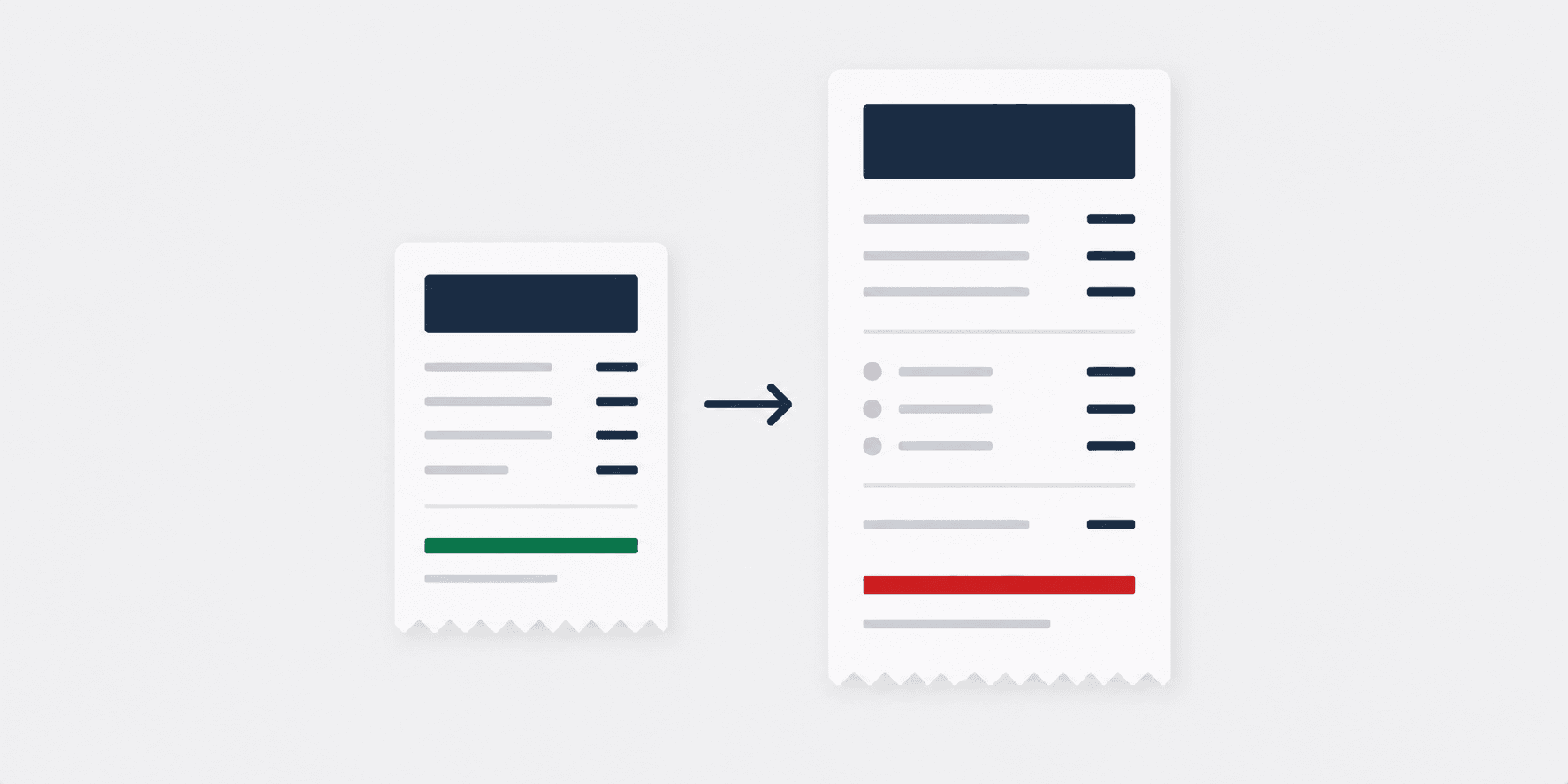
The pre-approval quote almost always shows principal and interest only. That is not the full payment. The real monthly obligation adds property taxes, homeowners insurance, and PMI if your down payment is under 20%, and these are not optional extras you can skip. They are collected by the lender as part of most mortgage agreements.
The reason banks lead with principal and interest is straightforward. That is the part they control and the part that directly reflects the loan terms they are offering you. The rate, the loan amount, the term: all of those feed into the P&I number. Taxes and insurance are outside the lender’s control because they depend on where the home is, what the local assessor decides, and which insurance carrier you choose. So banks quote what they can calculate cleanly and leave the rest to closing day.
In practice, this creates a gap that catches a lot of first-time buyers off guard. The $340 difference I ran into was not outrageous by any measure. On a $400,000 home in a mid-cost state, the gap between P&I and the real PITI payment can easily run $600 to $900 per month depending on local tax rates, insurance costs, and whether PMI applies. You find that out at closing, not at pre-approval.
Escrow is the mechanism that handles this. Your lender sets up an escrow account where they collect a portion of your annual taxes and insurance each month, then pay those bills directly when they come due. This is why your monthly payment includes more than just P&I. The lender is essentially holding your tax and insurance funds until they are needed, and that monthly collection is part of what clears your bank account.
What is the real mortgage payment formula?
The real mortgage payment formula is PITI: Principal plus Interest plus Taxes plus Insurance. For most borrowers with under 20% down, add PMI on top of that. That total is the number that hits your bank account every month, and that is the only number worth planning around when you are figuring out how to calculate your mortgage payment.
Here is a worked example using a real home price and the current rate from the Freddie Mac Primary Mortgage Market Survey, which put the 30-year fixed rate at 6.53% as of May 28, 2026.
Loan Setup
Step 1: Principal and interest
M = P[r(1+r)^n] / [(1+r)^n - 1]
P = $360,000 | r = 6.53% / 12 = 0.005442 | n = 360
Result: $2,281/month
Step 2: Property taxes
$400,000 home at 1.2% annual tax rate = $4,800/year
$4,800 / 12 = $400/month
Step 3: Homeowners insurance
$400,000 at 0.4% annually = $1,600/year
$1,600 / 12 = $133/month
Step 4: PMI (down payment under 20%)
$360,000 loan at 0.8% PMI = $2,880/year
$2,880 / 12 = $240/month
Total real payment (PITI + PMI)
$3,054/month
Bank’s P&I quote only
$2,281/month
Gap you need to plan for
$773/month
That $773 gap is why people get surprised at closing. The mortgage payment formula itself is not complicated. The problem is that two different numbers get used in two different conversations, and most buyers do not realize it until they are sitting at the title table.
You can run the full PITI calculation yourself at the Vortenza mortgage payment calculator. Enter the home price, down payment, rate, and local tax rate and it returns the complete breakdown before you talk to a lender.

What is PMI and who does it actually protect?
PMI is private mortgage insurance. It protects the lender, not you, if you default on the loan. You are the one paying for it every month.
On conventional loans, PMI kicks in when your down payment is under 20% of the purchase price. The lender considers a smaller down payment higher risk, and PMI is how they insure against that risk. The cost typically runs between 0.5% and 1.5% of the loan amount annually. On a $360,000 loan at 0.8%, that comes to $2,880 per year, or $240 per month added to your mortgage payment.
Loan comparison: Down payments and mortgage insurance fees
Conventional loans require private mortgage insurance (PMI) if your down payment is under 20%. FHA loans require an upfront mortgage insurance premium (MIP) plus annual MIP paid monthly for the life of the loan. VA loans require no monthly mortgage insurance but charge a one-time funding fee at closing.
USDA loans require an upfront guarantee fee and an annual fee paid monthly. Choosing the right loan type depends on your down payment budget and credit profile, as the monthly insurance rates vary significantly between conventional PMI and FHA MIP.
I did not know PMI existed until about two weeks before my closing. When I found out, I asked my loan officer why it was not in the pre-approval estimate. The answer was something about escrow estimates being variable. That is technically true and practically useless. The more useful thing to say would have been: “Because your down payment is under 20%, you will pay an additional $240 per month that insures us, not you, against default.” Nobody said that.
PMI does go away eventually. Under the Homeowners Protection Act, lenders are required to cancel PMI automatically when you reach 22% equity based on the original purchase price and the original amortization schedule. You can also request cancellation at 20% equity, though the lender may require a new appraisal. It does not disappear on its own before those thresholds.
The math on waiting versus saving is worth actually running. On a $360,000 loan at 0.8% PMI, you are paying $2,880 per year. If it takes seven years to reach 20% equity through normal amortization, that is over $20,000 in PMI payments total. Some buyers are better off saving longer to hit 20% down before buying. Others are better off buying sooner and accepting the PMI cost. Which option makes more sense depends on how fast home values are rising in your market and what you would do with the additional savings in the meantime. There is no universal answer. But running the PMI mortgage calculation before deciding on a down payment amount is worth the fifteen minutes it takes.
| Down Payment % | Down Payment ($400,000 Home) | Loan Amount | PMI Required | Impact on Monthly Payment |
|---|---|---|---|---|
| 3% | $12,000 | $388,000 | Yes (highest rate) | Maximum monthly payment and highest total interest cost |
| 5% | $20,000 | $380,000 | Yes (standard rate) | High monthly payment and standard PMI fee |
| 10% | $40,000 | $360,000 | Yes (reduced rate) | Moderate monthly payment and lower PMI fee |
| 20% | $80,000 | $320,000 | No | Lowest monthly payment, zero PMI, and optional escrow account |
How does escrow work and why does your payment change every year?
Escrow is an account your lender manages to collect your property taxes and insurance monthly and pay them on your behalf when they come due. It is the reason your “fixed” mortgage payment can increase even when your interest rate stays exactly the same.
The monthly escrow contribution follows a simple formula: add up your annual property taxes, annual homeowners insurance, and annual PMI cost, then divide by 12. That is what gets added to your P&I each month. For mortgage escrow explained in concrete terms: if your annual property tax is $3,600 and homeowners insurance is $1,200, you are contributing $400 per month to escrow regardless of what happens with your interest rate.

Once a year, your lender runs an escrow analysis. They look at what came out of the account to pay your taxes and insurance, compare it to what was collected, and recalculate going forward. If your property was reassessed and taxes jumped from $3,600 to $4,200 annually, the monthly escrow contribution recalculates from $300 to $350. Your total mortgage payment goes up $50 per month with no change to your loan terms.
The escrow shortage situation is where it gets more painful. If the lender undercollected in the prior year, meaning they paid out more than they collected, you end up with a negative escrow balance. At the annual review, they can either bill you the full shortage as a lump sum or spread it across the next 12 months as a monthly payment increase. I had a $280 monthly increase in year two because the county reassessed the property upward and the initial escrow estimate had been too low. I thought the servicer had made an error. They had not. The property taxes went up and the escrow adjustment followed automatically.
If you believe an escrow recalculation is wrong, the Consumer Financial Protection Bureau has resources on disputing escrow calculations and understanding your rights as a borrower. The process is more straightforward than most people expect, but you do have to initiate it in writing.
15-year vs 30-year mortgage: what the math actually looks like
A 15-year mortgage has a higher monthly payment but dramatically lower total interest paid over the life of the loan. Most people only compare the monthly number and never see the full picture.
Using the same $360,000 loan and the rates from Freddie Mac’s May 28, 2026 survey (6.53% for 30-year, 5.87% for 15-year), the comparison breaks down like this:
| 30-year at 6.53% | 15-year at 5.87% | |
|---|---|---|
| Monthly P&I payment | $2,281 | $3,018 |
| Monthly difference | +$737/month | |
| Total interest paid | $460,760 | $183,240 |
| Interest saved on 15-year | $277,520 |
$277,520 in interest savings. That number does not get talked about enough when people are deciding between loan terms. The conversation usually stays at the monthly payment level: $737 more per month on the 15-year. That is real money and for most buyers it genuinely is not affordable. The 30-year is the only realistic option for a lot of households, and there is nothing wrong with that.
What is worth knowing is that you can capture some of the 15-year’s interest savings without committing to the higher required payment. On a 30-year loan, making even one extra principal payment per year can shave years off the loan term and cut thousands in total interest paid. You do not lock yourself into the higher obligation, but you still chip away at the balance faster. The compound interest guide covers how the amortization math works on extra payments, which is useful if the 15 vs 30 year mortgage comparison is part of your decision.

How much mortgage can you actually afford?
The 28% rule says your total mortgage payment (PITI) should not exceed 28% of your gross monthly income. That is the starting point lenders use when they are evaluating how much mortgage you can afford, and it is worth knowing before you walk into a pre-approval conversation.
The full guideline is the 28/36 rule. The 28% cap covers housing costs. The 36% cap covers all debt combined, including car payments, student loans, and credit card minimums alongside your mortgage. Lenders look at both numbers, though the specific thresholds vary somewhat by lender and loan type.
Under the hood, your debt-to-income (DTI) ratio is split into two metrics: the front-end ratio, which measures housing costs, and the back-end ratio, which includes all monthly debt. Homeowners association (HOA) fees and your loan-to-value (LTV) ratio directly affect these calculations, determining the final mortgage terms you qualify to receive.
A concrete example: on $90,000 annual income, gross monthly income is $7,500. Multiply by 0.28 and you get $2,100 as the maximum PITI payment most lenders want to see. At 6.53% with taxes estimated at 1.2% of home value and a 10% down payment triggering PMI, that $2,100 ceiling buys roughly a $250,000 to $280,000 home in most markets. In New York, San Francisco, or Seattle, the 28% rule is aspirational. In most of the Midwest and South, it is actually achievable.
Knowing your real number before talking to a lender matters more than knowing the rule. Lenders will tell you the maximum they are willing to lend. That is not the same as the maximum you can afford while still contributing to retirement, handling repairs, or managing a job change. Use the Vortenza mortgage payment calculator to work backward from a comfortable monthly number to a target home price, rather than starting with a home price and hoping the payment fits.
One thing that trips up buyers with irregular income: lenders treat freelance and self-employment income differently from salary. If your income varies month to month, the way lenders calculate how much mortgage you can afford changes in ways that can cut your maximum loan amount by tens of thousands of dollars. The freelance vs salary comparison guide covers how lenders handle irregular income specifically, which is worth reading before you apply if any part of your earnings comes from 1099 work.
What factors increase your monthly mortgage payment?
Your monthly mortgage payment increases when property tax rates rise or homeowners insurance premiums go up. It can also increase if your escrow account has a shortage from the previous year, which the lender collects in the following year.
Since property taxes and insurance premiums are evaluated annually, even a fixed-rate mortgage payment can change over time. If tax assessments or insurance rates increase, the monthly escrow portion of your payment adjusts upward to cover the new costs.
Frequently asked questions
What does PITI stand for?+
Why is my actual mortgage payment higher than the pre-approval amount?+
How do I calculate my mortgage payment manually?+
What is PMI and when does it go away?+
How much is property tax added to a mortgage payment?+
Why did my mortgage payment go up if I have a fixed rate?+
Is a 15-year or 30-year mortgage better?+
What is the 28% rule for mortgage affordability?+
What is an escrow shortage and what happens?+
How do I calculate how much mortgage I can afford?+
What is the difference between front-end and back-end debt-to-income ratios?+
How do homeowners association (HOA) fees affect mortgage payment calculations?+
How does the loan-to-value (LTV) ratio determine if you must pay private mortgage insurance?+
Can you pay your property taxes and homeowners insurance directly instead of using escrow?+
The gap between what banks quote and what you actually pay is not a trick. Two different numbers get used in two different conversations. The pre-approval number covers principal and interest only. The real payment is PITI plus PMI if your down payment is under 20%. Knowing the mortgage payment formula before you start house hunting changes which homes are actually within reach and prevents the closing-day math from being a surprise.
Run the full PITI calculation using the Vortenza mortgage payment calculator before you talk to a lender. Use real current rates, estimate taxes at 1.2% of home value as a rough starting point, and add PMI if your down payment will be under 20%. The number you get will be close to what actually clears your bank account every month. That is the number worth planning around.
If you want to see how extra principal payments reduce the total interest you pay over the loan life, the compound interest guide walks through the amortization math. And if your income includes any freelance or self-employment work, read the freelance vs salary comparison guide before applying, because lenders calculate affordability differently for 1099 income than for W-2 salary.
About this guide
Written by the Vortenza Editorial Team. We build free financial calculators and practical guides for people making real money decisions. The $340 closing day surprise described in this guide was a real one. Data: Freddie Mac Primary Mortgage Market Survey, May 28, 2026 (6.53% 30-year fixed). Home price reference: Federal Reserve Bank of St. Louis Q1 2026 data.
Related tools
Related Guides
Compound Interest Explained: Formula, Rule of 72, and Real Examples
FinanceFreelance vs Salary 2026: Real Financial Comparison
FinanceFreelancer Tax Deductions 2026: Every Deduction You Can Claim
FinanceSelf-Employment Tax Guide 2026: How SE Tax Works
FinanceFederal Income Tax for Freelancers 2026
FinanceFreelance Hourly Rate Calculator 2026: Set Your Real Rate