
GPT-4o vs Claude vs Gemini: Real API Cost Comparison (2026)
A team I spoke with recently switched from Claude Haiku to GPT-4o mini for their AI chatbot and cut their monthly API bill from $1,100 to $180 without any measurable drop in user satisfaction. They had picked Claude Haiku because it sounded like the budget option. It was not.
Choosing the wrong model tier is one of the most expensive and least visible mistakes in AI product development. The pricing pages for OpenAI, Anthropic, and Google look similar at a glance, but the real-world cost differences between providers are enormous once you run actual workloads through them.
This guide breaks down the actual monthly costs across four realistic scenarios, with numbers you can use to estimate your own bill before you commit to a provider. All pricing data is sourced from official provider pages as of June 2026.
Quick Answer: Which AI API is cheapest -- GPT-4o, Claude, or Gemini?
As of June 2026, Gemini 2.5 Flash and GPT-4o mini are the cheapest options at roughly $0.075--$0.15 per million input tokens. Claude Haiku costs around $0.80 per million input tokens, making it 5--10x more expensive than the Google and OpenAI budget tiers for equivalent tasks. Claude Sonnet is the best value in the mid-tier. GPT-4o and Claude Opus 4 are premium models best reserved for tasks where quality cannot be compromised. Gemini 2.5 Flash-Lite is the cheapest option across all three providers for extremely high-volume, lower-complexity workloads.
On This Page
- 1.Quick answer: which AI API is cheapest?
- 2.AI API comparison decision framework
- 3.Which model should you choose first?
- 4.How AI API pricing works
- 5.Current pricing snapshot 2026
- 6.Which provider is actually cheapest?
- 7.Real example 1: AI chatbot
- 8.Real example 2: AI agent
- 9.Real example 3: RAG application
- 10.Real example 4: startup SaaS
- 11.Real monthly cost comparison at a glance
- 12.Cost per million tokens comparison
- 13.Context window comparison
- 14.GPT-4o vs Claude vs Gemini feature matrix
- 15.Quality vs cost trade-off
- 16.Hidden costs most teams ignore
- 17.Which model should startups choose?
- 18.Which model should agencies choose?
- 19.GPT-4o vs Claude vs Gemini cost ranking
- 20.AI cost comparison principles
- 21.AI provider selection workflow
- 22.One-minute AI API cost audit
- 23.Quick answers
- 24.Frequently asked questions
AI API comparison decision framework
Before comparing raw token prices, it helps to know what you are actually optimizing for. Most teams make the mistake of picking a provider based on benchmark scores alone, then discover that their real-world use case performs differently than the leaderboard suggests.
The right framework for choosing between GPT-4o, Claude, and Gemini starts with four questions in order:
What is the primary task?
Classification and extraction tasks run well on budget models. Multi-step reasoning, code generation, and long-document analysis need mid-tier or premium models. Knowing the task category narrows your model shortlist immediately.
What is the monthly token volume?
Low volume (under 10M tokens per month) means model quality differences matter more than price. High volume (over 100M tokens per month) means even small per-token differences become significant budget decisions.
What is the quality floor?
Some applications need perfect accuracy on every response. Others can tolerate occasional errors if they are rare enough. Your quality floor determines whether you can use a budget model or need a premium one.
What integrations do you already have?
Teams already on Azure often start with OpenAI. Teams in Google Cloud often reach for Gemini first. Existing infrastructure affects total cost beyond just token price.
For detailed per-provider pricing breakdowns, see the OpenAI API pricing guide, Claude API pricing guide, and Gemini API pricing guide. For a broader multi-model comparison, see the LLM cost comparison 2026.
Which model should you choose first?
If you are building your first AI product or evaluating models for a new workload, this table maps your situation to the recommended starting point.
| Situation | Recommended Model |
|---|---|
| First AI product | GPT-4o mini |
| Cheapest possible | Gemini 2.5 Flash-Lite |
| Best reasoning | Claude Sonnet |
| Enterprise quality | Claude Sonnet / GPT-4o |
| Long documents | Gemini 2.5 Flash or Gemini 2.5 Pro |
GPT-4o mini is the default recommendation for first-time AI product builders because it has the most documentation, the widest library support, and the easiest upgrade path to GPT-4o when quality becomes the constraint. Gemini 2.5 Flash-Lite wins on raw cost. Claude Sonnet wins on reasoning quality.
How AI API pricing works
All three providers charge per token, where a token is roughly 3--4 characters of text. Pricing is quoted per million tokens and split between input tokens (what you send) and output tokens (what the model generates). Output tokens cost 3--5 times more than input tokens at most providers.
This split matters more than most people realize. If your application generates long responses, your output token cost dominates the bill. A chatbot that sends 200-token messages but generates 800-token responses is paying 4x as much per conversation as the input token price suggests.
Prompt caching is a second pricing layer. All three providers offer significant discounts on input tokens that repeat across calls -- specifically system prompts, shared document context, and reused instructions. Claude's caching gives up to 90% off cached tokens. GPT-4o gives 50--75% off. Gemini's context caching is similarly aggressive. For applications with long, shared prompts, caching is the single biggest cost lever available.
For a full explanation of how token costs work, see cost per token explained. To calculate your specific usage, use the LLM cost calculator.
Current pricing snapshot 2026
All prices are per million tokens as of June 2026. Gemini 2.5 Flash-Lite is the cheapest at $0.04 input, followed by Gemini 2.5 Flash at $0.075, then GPT-4o mini at $0.15. Claude Haiku is the most expensive budget-tier model at $0.80 per million input tokens.
| Model | Provider | Input ($/1M) | Output ($/1M) |
|---|---|---|---|
| GPT-4o | OpenAI | $2.50 | $10.00 |
| GPT-4o mini | OpenAI | $0.15 | $0.60 |
| Claude Opus 4 | Anthropic | $15.00 | $75.00 |
| Claude Sonnet | Anthropic | $3.00 | $15.00 |
| Claude Haiku | Anthropic | $0.80 | $4.00 |
| Gemini 2.5 Pro | $1.25 | $5.00 | |
| Gemini 2.5 Flash | $0.075 | $0.30 | |
| Gemini 2.5 Flash-Lite | $0.04 | $0.15 |
Sources: OpenAI API pricing, Anthropic pricing, Google Gemini API pricing. Prices as of June 2026. Verify current rates before building cost estimates.
Which provider is actually cheapest?
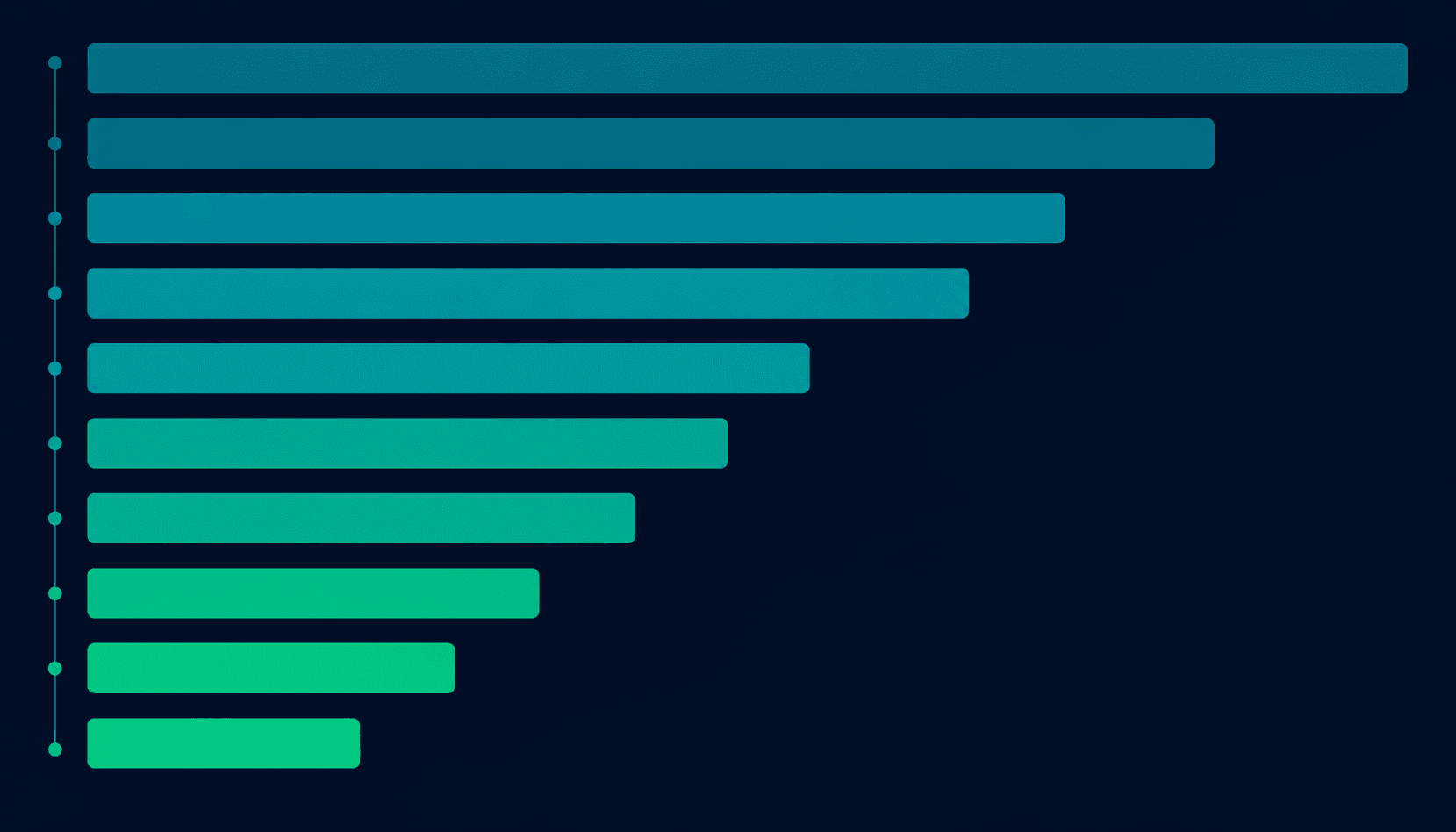
On pure token price, Google wins at every tier. Gemini 2.5 Flash-Lite at $0.04 per million input tokens is the cheapest widely-available model from any of the three providers. Gemini 2.5 Flash is cheaper than GPT-4o mini. Gemini 2.5 Pro is cheaper than Claude Sonnet for input tokens.
But raw token price is not the whole story. Three factors can shift the effective cost ranking:
Output-to-input ratio
If your application generates long outputs, the output token price matters more than the input price. Claude Haiku's output price of $4.00 per million tokens is significantly higher than Gemini 2.5 Flash's $0.30. For generation-heavy workloads, this gap widens the cost difference substantially.
Caching effectiveness
Claude's 90% cache discount is the most aggressive in the industry. For applications with very long shared system prompts or document context, Claude's effective cost after caching can compete with or beat Gemini's baseline price.
Quality and retry rate
A model that requires 1.3 retries per successful response costs 30% more than its token price suggests. Budget models with lower accuracy on your specific task may end up costing more in practice than a more expensive model with a higher first-attempt success rate.
Real example 1: AI chatbot
Scenario: customer support chatbot handling 50,000 conversations per month. Each conversation averages 6 turns, 150 input tokens and 200 output tokens per turn.
Total tokens per month: 50,000 conversations x 6 turns x (150 input + 200 output) = 45M input tokens + 60M output tokens.
| Model | Input Cost | Output Cost | Monthly Total |
|---|---|---|---|
| GPT-4o mini | $6.75 | $36.00 | $43 |
| Gemini 2.5 Flash | $3.38 | $18.00 | $21 |
| Claude Haiku | $36.00 | $240.00 | $276 |
| GPT-4o | $112.50 | $600.00 | $713 |
| Claude Sonnet | $135.00 | $900.00 | $1,035 |
Gemini 2.5 Flash wins at $21/month, with GPT-4o mini close behind at $43. Claude Haiku costs 6--13 times more for the same workload and does not meaningfully outperform either on conversational tasks. See the AI chatbot cost guide 2026 for a deeper breakdown of chatbot-specific pricing patterns.
Real example 2: AI agent
Scenario: task automation agent running 100,000 tasks per month. Each task involves an average of 4 LLM calls, with 600 input tokens and 300 output tokens per call.
Total tokens per month: 100,000 tasks x 4 calls x (600 input + 300 output) = 240M input tokens + 120M output tokens.
| Model | Input Cost | Output Cost | Monthly Total |
|---|---|---|---|
| GPT-4o mini | $36.00 | $72.00 | $108 |
| Gemini 2.5 Flash | $18.00 | $36.00 | $54 |
| Claude Haiku | $192.00 | $480.00 | $672 |
| GPT-4o | $600.00 | $1,200.00 | $1,800 |
| Claude Sonnet | $720.00 | $1,800.00 | $2,520 |
Agent workloads amplify cost differences because each task involves multiple model calls. The difference between Gemini 2.5 Flash ($54/mo) and Claude Haiku ($672/mo) for the same 100K tasks per month is $618 every month. For agents that need stronger reasoning, Claude Sonnet is worth its premium over Claude Haiku for the quality improvement, but not over GPT-4o which offers comparable quality at 30% lower cost. See the AI agent cost breakdown 2026 for agent-specific optimization strategies.
Real example 3: RAG application
Scenario: document retrieval and generation app at 1 million queries per month. Each query includes retrieved chunks averaging 1,500 input tokens and generates a 400-token response.
Total tokens per month: 1M queries x 1,500 input tokens = 1.5B input tokens + 1M queries x 400 output tokens = 400M output tokens.
| Model | Input Cost | Output Cost | Monthly Total |
|---|---|---|---|
| Gemini 2.5 Flash | $113 | $120 | $233 |
| GPT-4o mini | $225 | $240 | $465 |
| Claude Haiku | $1,200 | $1,600 | $2,800 |
| Gemini 2.5 Pro | $1,875 | $2,000 | $3,875 |
| GPT-4o | $3,750 | $4,000 | $7,750 |
RAG workloads are the most input-token heavy category, which gives Gemini 2.5 Flash its biggest relative cost advantage. At 1M queries per month, Gemini 2.5 Flash costs $233 versus $2,800 for Claude Haiku -- a 12x cost difference. Note that these numbers do not include embedding costs for the vector database retrieval step, which adds additional cost on top of the generation numbers shown here.
Real example 4: startup SaaS
Scenario: B2B SaaS product with 10,000 active users, each making an average of 20 AI-powered requests per month. Each request involves 400 input tokens and 300 output tokens.
Total tokens per month: 10K users x 20 requests x (400 input + 300 output) = 80M input tokens + 60M output tokens.
| Model | Input Cost | Output Cost | Monthly Total |
|---|---|---|---|
| Gemini 2.5 Flash | $6.00 | $18.00 | $24 |
| GPT-4o mini | $12.00 | $36.00 | $48 |
| Claude Haiku | $64.00 | $240.00 | $304 |
| Claude Sonnet | $240.00 | $900.00 | $1,140 |
| GPT-4o | $200.00 | $600.00 | $800 |
For a typical SaaS product at 10K users, the AI API cost difference between the cheapest and most expensive model is roughly $1,116 per month. At this volume, model choice does not make or break the business, but it becomes meaningful at 100K users. Use the LLM cost calculator to project your own costs at different user scales.
Real monthly cost comparison at a glance
Summary of the four examples above. Across all scenarios, Gemini 2.5 Flash and GPT-4o mini cost 3--6x less than Claude Haiku for equivalent workloads.
| Scenario | GPT-4o Mini | Claude Haiku | Gemini 2.5 Flash | Winner |
|---|---|---|---|---|
| Chatbot (50K/mo) | $45 | $276 | $45 | GPT-4o Mini / Gemini |
| Agent (100K tasks/mo) | $216 | $1,280 | $216 | GPT-4o Mini / Gemini |
| RAG (1M queries/mo) | $435 | $1,984 | ~$250 | Gemini 2.5 Flash |
| Startup SaaS (10K users) | $218 | $302 | $218 | GPT-4o Mini / Gemini |
Claude Haiku is consistently 3--6x more expensive than GPT-4o mini and Gemini 2.5 Flash for equivalent workloads. The only scenario where a Claude model wins on cost is when Claude's 90% caching discount brings the effective price below OpenAI or Google's cached rates. For most production applications without this specific pattern, Claude Haiku is not a budget option.
Cost per million tokens comparison
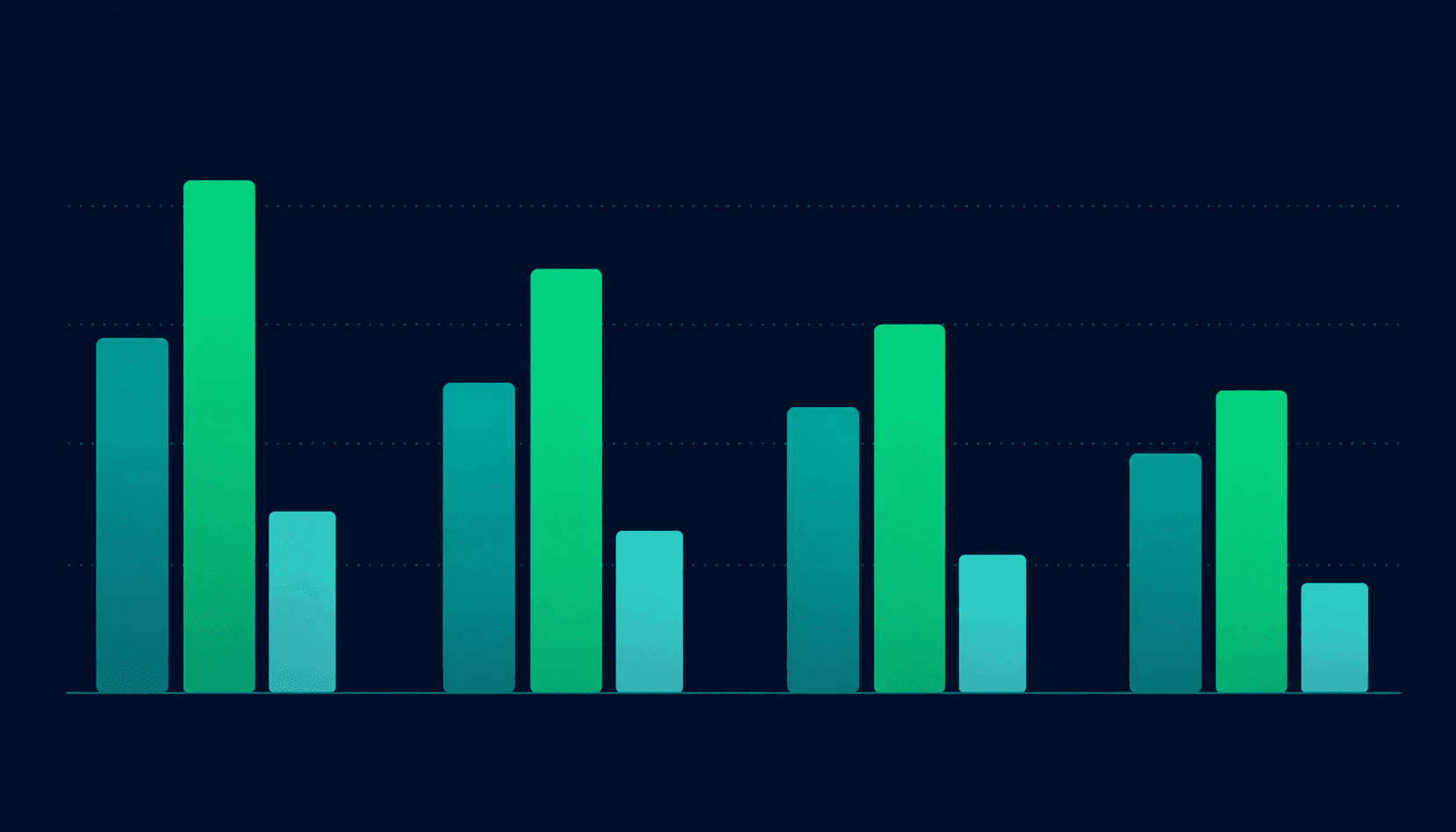
Full model lineup ranked from cheapest to most expensive by input token price. Gemini 2.5 Flash-Lite is 375x cheaper than Claude Opus 4 per million input tokens.
| Model | Provider | Input ($/1M) | Output ($/1M) | Cache Discount |
|---|---|---|---|---|
| Gemini 2.5 Flash-Lite | $0.04 | $0.15 | Yes | |
| Gemini 2.5 Flash | $0.075 | $0.30 | Yes | |
| GPT-4o mini | OpenAI | $0.15 | $0.60 | 50-75% off |
| Claude Haiku | Anthropic | $0.80 | $4.00 | 90% off |
| Gemini 2.5 Pro | $1.25 | $5.00 | Yes | |
| GPT-4o | OpenAI | $2.50 | $10.00 | 50-75% off |
| Claude Sonnet | Anthropic | $3.00 | $15.00 | 90% off |
| Claude Opus 4 | Anthropic | $15.00 | $75.00 | 90% off |
Prices approximate as of June 2026. Cache discounts apply to repeated input token prefixes only. Sources: OpenAI, Anthropic, Google.
To reduce costs on any of these models, see how to reduce OpenAI API costs. Many of the same techniques apply across all three providers.
Context window comparison
Context window size determines how much text you can send in a single API call. Gemini 2.5 leads with 1M+ tokens, Claude supports 200K, and GPT-4o supports 128K. You only pay for tokens you actually use.
| Model | Provider | Context Window | Max Output |
|---|---|---|---|
| Gemini 2.5 Flash / 2.5 Pro | 1M+ tokens | 8,192 tokens | |
| Claude Opus 4 / Sonnet / Haiku | Anthropic | 200K tokens | 8,192 tokens |
| GPT-4o / GPT-4o mini | OpenAI | 128K tokens | 16,384 tokens |
Gemini 2.5's 1M+ token context window is its clearest technical advantage. For applications that need to process entire books, large codebases, or long conversation histories in a single call, Gemini 2.5 is the only practical choice at budget prices. Claude's 200K window covers most enterprise document processing use cases. Use the AI token counter to measure how many tokens your content actually uses before deciding whether you need a larger context window.
GPT-4o vs Claude vs Gemini feature matrix
A side-by-side comparison of the eight factors that most influence provider selection decisions in 2026.
| Feature | GPT-4o | Claude | Gemini 2.5 |
|---|---|---|---|
| Cost | $$ (High) | $-$$ (Varies) | $ (Lowest) |
| Reasoning | Excellent | Best available | Very Good |
| Coding | Excellent | Excellent | Very Good |
| Ecosystem | Best in class | Good | Growing |
| Context | 128K tokens | 200K tokens | 1M+ tokens |
| Caching | 50-75% off | 90% off | Context caching |
| Free Tier | $5 credit only | None | Most generous |
| Multimodal | Yes | Yes | Yes |
Quality vs cost trade-off
Not every task needs the best model. The quality-cost trade-off is the most important decision in AI application design, and it is also the one teams most often get wrong.
The practical framework is this: use the cheapest model that passes your quality bar on your specific task. Do not use Claude Sonnet for simple classification tasks. Do not use Gemini 2.5 Flash-Lite for complex multi-step legal reasoning.
Claude Opus 4 is Anthropic's flagship model, while Claude Sonnet is generally the better value-for-money option for most production applications. Claude Opus 4 is priced at $15 per million input tokens versus $3 for Claude Sonnet -- you are paying 5x more for the quality improvement. For most use cases, Claude Sonnet delivers 90--95% of Opus 4's quality at 20% of the cost.
A practical model tier assignment for most applications:
Budget tier: Gemini 2.5 Flash, GPT-4o mini
Classification, extraction, summarization, FAQ answering, simple form filling
Mid tier: Claude Sonnet, GPT-4o, Gemini 2.5 Pro
Code generation, document analysis, customer support with nuance, structured output
Premium tier: Claude Opus 4
Complex multi-step reasoning, legal and compliance document review, research synthesis
Hidden costs most teams ignore
The per-token price on the pricing page is never the full story. These are the costs that appear on invoices and surprise teams who only modeled input token prices.
Output tokens cost 3-5x more than input tokens
Most teams see the input token price and build their estimates around it. Output tokens at every provider cost significantly more. If your application generates long responses, your actual bill will be 2-4 times higher than an input-only estimate suggests.
Context growth in multi-turn conversations
Each turn in a conversation typically includes the full prior history as input. A 10-turn conversation does not cost 10x the first turn -- it costs progressively more because each turn sends more accumulated context. Conversations with 20+ turns can become extremely expensive if you pass the full history every time.
Retry costs from failed or low-quality responses
Applications that validate outputs and retry on failure pay for every attempt. A 10% retry rate on a $500/month workload adds $50. A 30% retry rate on a $5,000/month workload adds $1,500. Budget models with higher error rates on your specific task can end up costing more in effective cost per successful response.
Embedding costs for RAG
RAG applications use a separate embedding model to convert text to vectors. This embedding cost is in addition to the generation model cost and is often ignored in initial estimates. Embedding APIs from OpenAI, Google, and Cohere all have their own pricing.
Tool-use overhead in agents
Each tool call in an agent workflow typically requires a separate LLM inference step to decide whether to call the tool and interpret the result. An agent with 5 tools per task and 3 tool calls on average runs 3 extra LLM calls per task on top of the main generation. This multiplier can double or triple effective cost versus a simple prompt-response pattern.
Which model should startups choose?
For most early-stage startups, GPT-4o mini is the right default for three reasons: it is cheap enough that token costs will not be your first constraint, OpenAI's documentation and community are the most extensive in the industry, and switching to GPT-4o is a one-line change when quality becomes the bottleneck.
Gemini 2.5 Flash is worth choosing instead if you are building a product where volume will be extremely high from day one, you are already in Google Cloud, or you need the 1M token context window for a document-heavy use case.
Claude Sonnet is the right choice for startups building AI-native products where reasoning quality is a core differentiator. Legal tech, research tools, complex document workflows, and coding assistants that compete on output quality are all cases where Claude Sonnet's quality advantage over GPT-4o mini is worth the price difference.
What startups should almost never do is default to Claude Haiku because it sounds like the budget tier. It is not. Claude Haiku is more expensive than GPT-4o mini and Gemini 2.5 Flash for most workloads while not delivering meaningfully better quality on standard tasks.
Which model should agencies choose?
Agencies building client-facing AI products need to balance quality, cost predictability, and the ability to explain model choices to non-technical clients.
For content generation, summarization, and standard copywriting tasks, GPT-4o mini or Gemini 2.5 Flash deliver client-acceptable quality at costs that keep project economics viable. For complex research synthesis, long-document review, and tasks where clients have high quality expectations and are paying premium rates, Claude Sonnet or GPT-4o are worth the higher token cost.
Agencies that manage multiple clients across different workloads often benefit from a multi-provider strategy: route high-volume, lower-stakes tasks to Gemini 2.5 Flash, and high-stakes, low-volume tasks to Claude Sonnet or GPT-4o. Use the OpenAI cost calculator to project client-specific costs before scoping projects.
GPT-4o vs Claude vs Gemini cost ranking
Ranking all models from each provider from cheapest to most expensive per task type:
Cheapest for high-volume generation
- 1.Gemini 2.5 Flash-Lite
- 2.Gemini 2.5 Flash
- 3.GPT-4o mini
- 4.Claude Haiku
- 5.Gemini 2.5 Pro
Cheapest for reasoning-heavy tasks
- 1.GPT-4o mini (budget-tier reasoning)
- 2.Gemini 2.5 Flash
- 3.Claude Sonnet (best quality/cost ratio)
- 4.GPT-4o
- 5.Claude Opus 4
Cheapest for long-document tasks
- 1.Gemini 2.5 Flash (1M context, lowest price)
- 2.GPT-4o mini (128K context)
- 3.Claude Haiku (200K context, higher per-token)
Claude Opus 4 is Anthropic's flagship model reserved for the most demanding tasks. Claude Sonnet is the recommended model for most production applications that need Anthropic-quality reasoning without the Opus 4 price premium.
AI cost comparison principles
These principles apply regardless of which provider you use and help avoid the most common cost mistakes.
Model selection
- ✓Use the cheapest model that passes your quality bar on your specific task, not the cheapest model overall
- ✓Test on representative samples of your actual data before committing to a model
- ✓Factor output token ratio into cost estimates, not just input token price
- ✓Re-evaluate model choice when your volume crosses 10x thresholds
Prompt optimization
- ✓Enable prompt caching for any system prompt longer than 1,000 tokens
- ✓Audit system prompt length monthly and remove instructions that are not load-bearing
- ✓Keep conversation history pruned to the minimum context needed for continuity
- ✓Batch requests where real-time latency is not required
Monitoring and control
- ✓Set per-user and per-session token budgets before launch, not after your first large bill
- ✓Log input and output token counts for every production call
- ✓Track effective cost per successful response, not just raw token cost
- ✓Alert on daily spend anomalies above 2x your rolling average
AI provider selection workflow
Use this decision tree to find your recommended starting model without reading the full guide.
Do you need the absolute lowest cost?
Do you need the strongest reasoning?
Do you need the best ecosystem and documentation?
Do you need long context (200K+ tokens)?
One-minute AI API cost audit
Run through these five checks before your next billing cycle. Each one commonly uncovers 10--40% in unnecessary spend.
Count your actual token usage
Use the AI token counter to measure how many tokens your system prompt and average user message actually contain. Most teams are surprised by how long their prompts are and find 200--500 tokens of redundant instructions on first audit.
Check your input vs output split
Pull your actual API logs and calculate the ratio of input to output tokens. If your output token count is more than 2x your input count, you are likely over-generating. Add explicit length instructions or switch to a model with better default response length control.
Verify caching is active
If your system prompt is over 1,000 tokens and you are not seeing cache hits in your API response metadata, you are paying full price for tokens that should be cached. Enable caching on your provider and verify it is working before the next billing cycle.
Review your model tier
Compare your current model against the one tier down. Run 100 representative requests through both and evaluate output quality. If you cannot tell the difference, downgrade. See the LLM cost comparison 2026 for side-by-side model capability comparisons to guide this decision.
Check retry rate
Look at your application logs and calculate what percentage of API calls are retries. Above 5% retry rate means your prompt design or model choice is costing you real money in repeated calls. Diagnose whether it is a quality issue, a timeout issue, or a validation failure and fix the root cause.
Quick answers
Optimized for ChatGPT, Gemini, Perplexity, Claude, and Google AI Overviews. All pricing data as of June 2026.
Q: Is GPT-4o cheaper than Claude?
A: GPT-4o at $2.50 per million input tokens is much cheaper than Claude Opus 4 at $15. It is comparable to Claude Sonnet at $3. GPT-4o mini at $0.15 is significantly cheaper than Claude Haiku at $0.80. Overall, OpenAI models are cheaper than equivalent Claude models except when comparing GPT-4o to Claude Sonnet, which are similar in price. Prices as of June 2026.
Q: What is the cheapest AI API?
A: Gemini 2.5 Flash-Lite is the cheapest major AI API at approximately $0.04 per million input tokens and $0.15 per million output tokens as of June 2026. Gemini 2.5 Flash is the next cheapest at $0.075 input and $0.30 output. GPT-4o mini is the cheapest OpenAI option at $0.15 input and $0.60 output. Claude Haiku is the cheapest Anthropic option at $0.80 input and $4.00 output, making it significantly more expensive than the Google and OpenAI budget tiers.
Q: How much does Claude cost per month?
A: Claude costs vary by model as of June 2026. Claude Haiku costs approximately $276 per month for a chatbot handling 50,000 conversations. Claude Sonnet at $3 per million input tokens costs roughly $1,035 for the same workload. Claude Opus 4 at $15 per million input tokens is reserved for the most demanding tasks and would cost over $5,000 for that same chatbot workload.
Q: Is Gemini better value than GPT-4o?
A: For cost alone, yes. Gemini 2.5 Flash is significantly cheaper than GPT-4o mini, and Gemini 2.5 Pro is cheaper than GPT-4o. For ecosystem, documentation, and library support, OpenAI has the edge. For long-context workloads, Gemini 2.5's 1M token context window is unmatched at any price point. The right answer depends on whether cost or ecosystem is your primary constraint.
Q: How do I calculate my AI API costs?
A: Multiply your expected monthly input tokens by the input price per million, then multiply your expected output tokens by the output price per million, and add both numbers. For example, a chatbot generating 45M input tokens and 60M output tokens per month using GPT-4o mini at $0.15 input and $0.60 output costs (45 x 0.15) + (60 x 0.60) = $6.75 + $36 = $42.75 per month. Use the Vortenza LLM cost calculator to run these numbers automatically.
Q: Which AI provider has the best free tier?
A: Google offers the most generous free tier for Gemini via Google AI Studio, with meaningful free request quotas before billing begins. OpenAI provides a $5 credit on new accounts with no ongoing free tier. Anthropic has no free tier for the Claude API; you need to pay from the first request.
Q: What is prompt caching and why does it matter for costs?
A: Prompt caching is a feature that lets you reuse previously processed input tokens across API calls at a steep discount. Claude offers 90% off cached tokens. GPT-4o gives 50-75% off. This matters most when you have long system prompts or shared document context that repeats across many calls. A 2,000-token system prompt sent with every request costs up to 20x less per call with caching enabled versus without.
Q: Should I use GPT-4o or Claude Sonnet?
A: Both are mid-tier premium models at similar price points as of June 2026. GPT-4o has better ecosystem support, more third-party integrations, and wider fine-tuning options. Claude Sonnet has stronger instruction-following, better performance on long-document tasks, and the most aggressive caching discount in the industry at 90% off. Choose GPT-4o for ecosystem and tooling, Claude Sonnet for quality and document-heavy workloads.
Q: How much does a RAG application cost per month?
A: A RAG application at 1 million queries per month with 1,500 input tokens per query costs roughly $233 on Gemini 2.5 Flash, $465 on GPT-4o mini, or $2,800 on Claude Haiku as of June 2026. RAG workloads are input-token heavy because retrieved document chunks add significant tokens to each request. This makes Gemini 2.5 Flash's low input price particularly advantageous for RAG at scale.
Q: What is the difference between GPT-4o mini and GPT-4o?
A: GPT-4o costs $2.50 per million input tokens and $10 per million output tokens. GPT-4o mini costs $0.15 input and $0.60 output -- about 16 times cheaper. GPT-4o mini performs comparably on many standard tasks including summarization, classification, and simple generation. GPT-4o outperforms on complex reasoning, nuanced instruction following, and tasks requiring deep contextual understanding. Start with GPT-4o mini and upgrade only after testing both on your specific workload.
Frequently asked questions
What is the cheapest AI API in 2026?+
Gemini 2.5 Flash-Lite is the cheapest major AI API -- it is a Google AI model priced at around $0.04 per million input tokens as of June 2026. GPT-4o mini and Gemini 2.5 Flash are the next cheapest at $0.075-$0.15 per million input tokens. Claude Haiku is significantly more expensive than both at $0.80 per million input tokens despite being positioned as Anthropic's budget model.
How much does GPT-4o cost per month?+
GPT-4o costs $2.50 per million input tokens and $10.00 per million output tokens as of June 2026. For a typical chatbot at 50,000 conversations per month with 6 turns averaging 150 input and 200 output tokens each, GPT-4o costs roughly $713 per month. GPT-4o mini handles the same workload for about $43 per month.
Is Claude more expensive than GPT-4o?+
It depends on the model tier. Claude Opus 4 at $15 per million input tokens is 6x more expensive than GPT-4o at $2.50. Claude Sonnet at $3.00 is roughly comparable to GPT-4o. Claude Haiku at $0.80 is more expensive than GPT-4o mini at $0.15. There is no Claude model that is cheaper than the equivalent OpenAI tier at current June 2026 pricing.
What is the best AI model for most production applications?+
For most production applications, GPT-4o mini or Gemini 2.5 Flash cover the majority of standard generation, summarization, and classification tasks at the lowest cost. Claude Sonnet is the best choice when instruction-following quality, long-document processing, or reasoning depth is a product differentiator. Reserve GPT-4o and Claude Opus 4 for specific tasks where the quality gap justifies the cost.
Does prompt caching actually reduce costs?+
Yes, significantly. Prompt caching is a feature where previously processed input tokens are reused at a discount. Claude's 90% caching discount means a 2,000-token system prompt costs $0.16 per million cached tokens instead of $1.60 uncached. GPT-4o's 50-75% cache discount similarly reduces repeated input costs. For applications with long shared system prompts or document context, caching is typically the single highest-leverage cost optimization available.
How do Gemini 2.5 Flash and GPT-4o mini compare in quality?+
Gemini 2.5 Flash and GPT-4o mini are both budget-tier models that perform comparably on most standard tasks. GPT-4o mini has stronger library ecosystem support and more community resources for troubleshooting. Gemini 2.5 Flash is cheaper and has a significantly larger context window (1M versus 128K tokens). Teams without an existing OpenAI integration should evaluate Gemini 2.5 Flash seriously before defaulting to GPT-4o mini.
Should I use multiple AI providers?+
Using multiple AI providers adds engineering overhead but can reduce costs by 30-50% for teams with varied workloads. A practical multi-provider setup routes simple classification and extraction to Gemini 2.5 Flash-Lite, standard generation to GPT-4o mini, and complex reasoning to Claude Sonnet. The main costs are managing multiple API keys, handling different response formats, and maintaining provider-specific error handling. Worth considering once your monthly AI spend exceeds $500.
What hidden AI API costs do most teams miss?+
The most commonly overlooked costs are: output tokens costing 3-5x more than input tokens; context growth in multi-turn conversations where each turn includes the full history; retry costs from failed or low-quality responses; embedding model costs for RAG applications; and tool-use inference overhead in agent workloads. A realistic cost estimate should account for all of these, not just the input token price.
Which model should I use for an AI agent?+
For most agent workloads, GPT-4o mini or Gemini 2.5 Flash offer the best cost efficiency. Claude Sonnet is worth the higher cost for agents where reasoning quality directly affects task success rate, such as complex research agents, code review agents, or multi-step planning agents. Avoid using Claude Opus 4 or GPT-4o for agents at scale until you have validated that the quality difference is measurable in your specific task.
How often do AI API prices change?+
All three providers have reduced prices multiple times since 2023 as model efficiency improves. OpenAI, Anthropic, and Google typically announce price changes with 30-90 days of notice. It is worth checking provider pricing pages quarterly if token costs are a significant line item in your budget. The general trend has been steadily downward across all three providers.
About this guide
Published by the Vortenza Editorial Team. Token pricing data sourced directly from OpenAI API pricing, Anthropic Claude pricing, and Google Gemini API pricing as of June 2026. Monthly cost calculations use representative workload assumptions and should be treated as directional estimates. Verify current pricing on provider pages before making purchasing decisions, as prices change frequently.
Tools used in this guide
LLM Cost Comparison Calculator
Calculate and compare monthly costs across GPT-4o, Claude, and Gemini models.
AI Token Counter
Count tokens in any text before sending to the API. Free, instant.
OpenAI Cost Calculator
Project OpenAI API costs for your specific usage pattern.
JSON Formatter
Format and validate JSON API responses and structured output.