
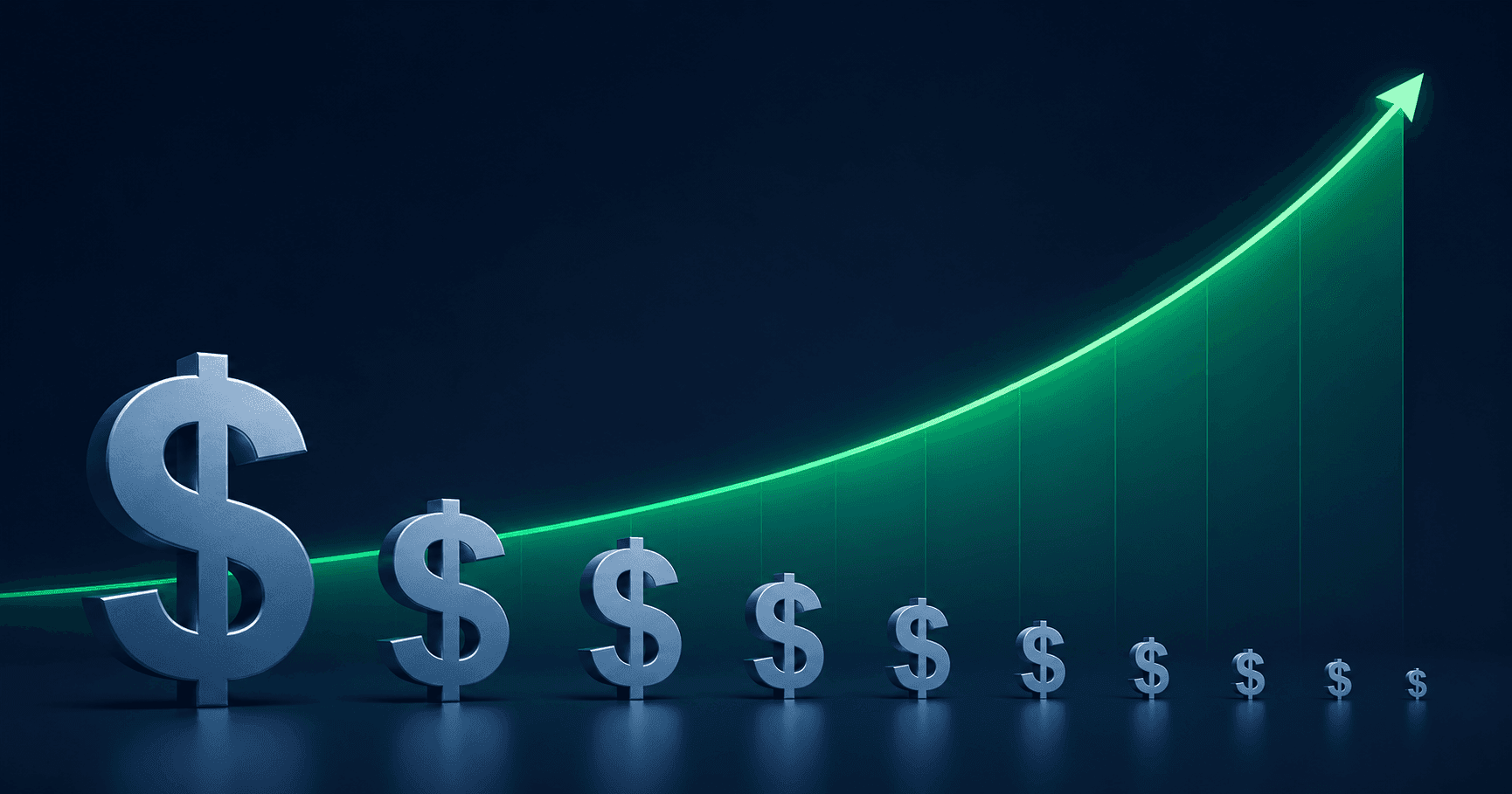
A dollar amount only becomes meaningful when adjusted for time.
“My grandfather bought his house for $12,000 in 1955.” That sounds remarkable today. “A starting salary of $45,000 in 2000 was a solid income.” Was it equivalent to $45,000 now? No. “The stock market has doubled since 2010.” Has your real purchasing power doubled?
None of these comparisons mean anything without inflation adjustment. Looking at raw dollar amounts across years is like comparing distances in miles and kilometers without converting. The numbers exist. The comparison does not.
Inflation reduces purchasing power even when account balances stay the same. A savings account holding $50,000 today will have the same $50,000 in five years -- but what that $50,000 can buy will be less. The money does not disappear. Its purchasing power erodes.
Key Takeaways
- ✓Inflation reduces purchasing power even when account balances stay the same -- a dollar held in cash loses value every year
- ✓$100 in 1913 (the first year the US began measuring CPI) had approximately the equivalent purchasing power of $3,200 by 2026, reflecting a cumulative inflation of about 3,100%
- ✓The US dollar has lost approximately 97% of its purchasing power since 1913, according to CPI data from the Bureau of Labor Statistics
- ✓Nominal gains can create the illusion of wealth when inflation is ignored -- a salary increase smaller than the inflation rate is a real pay cut
- ✓CPI (Consumer Price Index) is the primary measure used to calculate inflation in the United States, tracking a basket of goods and services monthly
- ✓Purchasing power determines what money can buy, not what it is worth on paper
- ✓Inflation affects savers, investors, employees, and retirees differently -- those on fixed incomes feel it most sharply
- ✓The real return on an investment is the nominal return minus the inflation rate; stock market gains that do not beat inflation represent negative real growth
All inflation figures in this guide use US Bureau of Labor Statistics CPI-U data (1913–2026). Dollar conversions are approximate.
On This Page
- Inflation quick answer
- Inflation decision framework
- Inflation decision tree
- What is inflation?
- What is purchasing power?
- How inflation works
- What is CPI?
- How inflation calculators work
- Real example 1: what is $100 from 1913 worth today?
- Real example 2: salary comparison across time
- Real example 3: home price inflation
- Inflation vs purchasing power
- Inflation vs investment returns
- How inflation affects retirement
- How inflation affects salaries
- Common inflation mistakes
- Inflation calculator example
- Inflation-protected assets
- One-minute purchasing power audit
- Quick answers
- Frequently asked questions
Inflation quick answer
Direct answer: Inflation is the general increase in prices and the corresponding decrease in the purchasing power of money. When inflation runs at 3% per year, $100 today buys what $97 would have bought a year ago.
| Term | Meaning |
|---|---|
| Inflation | The rate at which the general price level rises over time, reducing what money can buy |
| Deflation | The opposite -- falling prices, rising purchasing power (rare, often economically damaging) |
| CPI | Consumer Price Index -- the most widely used measure of inflation in the US, published monthly by the Bureau of Labor Statistics |
| Purchasing Power | What a given amount of money can actually buy in goods and services |
| Real Value | A dollar amount adjusted for inflation -- what it is actually worth in equivalent purchasing power |
| Nominal Value | A dollar amount as stated, without inflation adjustment -- the face value |
| Inflation Rate | The percentage change in the CPI from one period to another |
| Core Inflation | CPI excluding volatile food and energy prices -- used to identify underlying inflation trends |
Inflation decision framework
Direct answer: Any comparison of dollar amounts across different years requires inflation adjustment to be meaningful. Here is when to adjust and when raw numbers are acceptable.
| Goal | Recommended Action | Why |
|---|---|---|
| Compare salaries across years | Inflate-adjust to a common year | A $50,000 salary in 2000 is not $50,000 in 2026 in real terms |
| Compare home prices | Adjust for inflation, consider local markets | Raw price growth mixes real appreciation with inflation |
| Retirement planning | Use real purchasing power targets | A $1M target set in 2000 is worth far less in 2026 purchasing power |
| Evaluate investment returns | Subtract inflation rate for real return | 7% nominal return with 4% inflation is a 3% real gain |
| Historical cost comparisons | Always use CPI-adjusted dollars | A 1960 cost in 1960 dollars means nothing without adjustment |
| Wage raise negotiations | Compare against inflation rate | A 2% raise in a 4% inflation year is a real pay cut |
| Savings growth | Compare savings rate against inflation | Cash saving below inflation is losing purchasing power |
The rule of thumb: whenever comparing money across different years, adjust. If you are not adjusting, you are not actually comparing.
Inflation decision tree
Use this tree to determine which inflation adjustment applies to your situation.
What is inflation?
Direct answer: Inflation is the sustained increase in the general price level of goods and services in an economy, which reduces the amount that a fixed sum of money can purchase.
When the price of a grocery basket that cost $100 last year now costs $103, inflation for that basket is 3%. The basket is the same. The dollar buys less of it.
Inflation is measured by tracking how much prices change across a broad set of goods and services. No single product’s price represents inflation. It is an average across an economy-wide basket.
What inflation is not:
Inflation is not individual price increases. One product getting more expensive while others stay flat or get cheaper is a relative price change, not inflation. Inflation is the average, economy-wide direction of prices.
Inflation is also not the same as the cost of living. Cost of living includes specific prices in specific locations. Inflation is the national (or global) average change in prices over time.
How the US dollar has changed:
The US Bureau of Labor Statistics began tracking CPI in 1913. Since then, cumulative inflation has eroded the purchasing power of the dollar substantially. What cost $1.00 in 1913 costs approximately $31–32 in 2026 (using the BLS CPI inflation calculator). This represents a loss of about 97% of purchasing power over 113 years. The pace of that erosion has not been constant. Some decades saw near-zero inflation. Others -- particularly the 1970s and 2021–2023 -- saw inflation spike significantly above historical averages.
What is purchasing power?
Direct answer: Purchasing power is the amount of goods and services that a given sum of money can buy. When inflation rises, purchasing power falls. A higher nominal dollar amount does not necessarily mean greater purchasing power.
The clearest illustration: an employee who received a $50,000 salary in 2000 and a $65,000 salary in 2026 has a higher nominal income. In 2026 dollars, however, $50,000 in 2000 is equivalent to approximately $88,000–$90,000. Their $65,000 salary in 2026 represents a real income decrease relative to what they earned in 2000.
Purchasing power determines what money can buy, not what it is worth on paper.
How purchasing power erosion works in practice:
The savings account scenario: a household saves $100,000 and puts it in a bank account earning 0.5% interest. Inflation runs at 3.5% for five years. After five years, the account has grown to approximately $102,500. But in purchasing power terms, $100,000 in 2021 dollars is worth approximately $117,000 in 2026 dollars. The $102,500 balance represents a real purchasing power loss of about $14,500 compared to what the original $100,000 could buy.
The money did not disappear. The purchasing power did.
Nominal vs real:
- Nominal value: the face value of the dollar amount. $100 is $100, regardless of when.
- Real value: what that $100 actually buys. $100 in 1990 bought far more than $100 in 2026.
All meaningful financial comparisons across time should use real values.
How inflation works
Direct answer: Inflation is driven by four main forces: demand exceeding supply, supply constraints, monetary expansion, and cost-push pressures. In practice, all four often interact simultaneously.
Demand-pull inflation
When consumers and businesses want more goods and services than the economy can produce, sellers raise prices. The 2021-2022 inflation spike in the US was partly demand-pull, fueled by pandemic-era stimulus payments creating elevated consumer demand while supply chains struggled to recover.
Supply-side constraints
When raw materials, labor, or transportation become scarce or more expensive, producers pass those higher costs to consumers. The 2022 energy price spike following geopolitical events is an example.
Monetary expansion
When the amount of money in circulation grows faster than the economy's output, each dollar buys less. Central banks control the money supply through interest rates and quantitative easing, with inflation management as a primary objective.
Cost-push inflation
When wages rise (which is generally positive for workers), businesses face higher labor costs and may raise prices. When energy costs rise, nearly every product becomes more expensive because energy touches every supply chain.
The compounding effect:
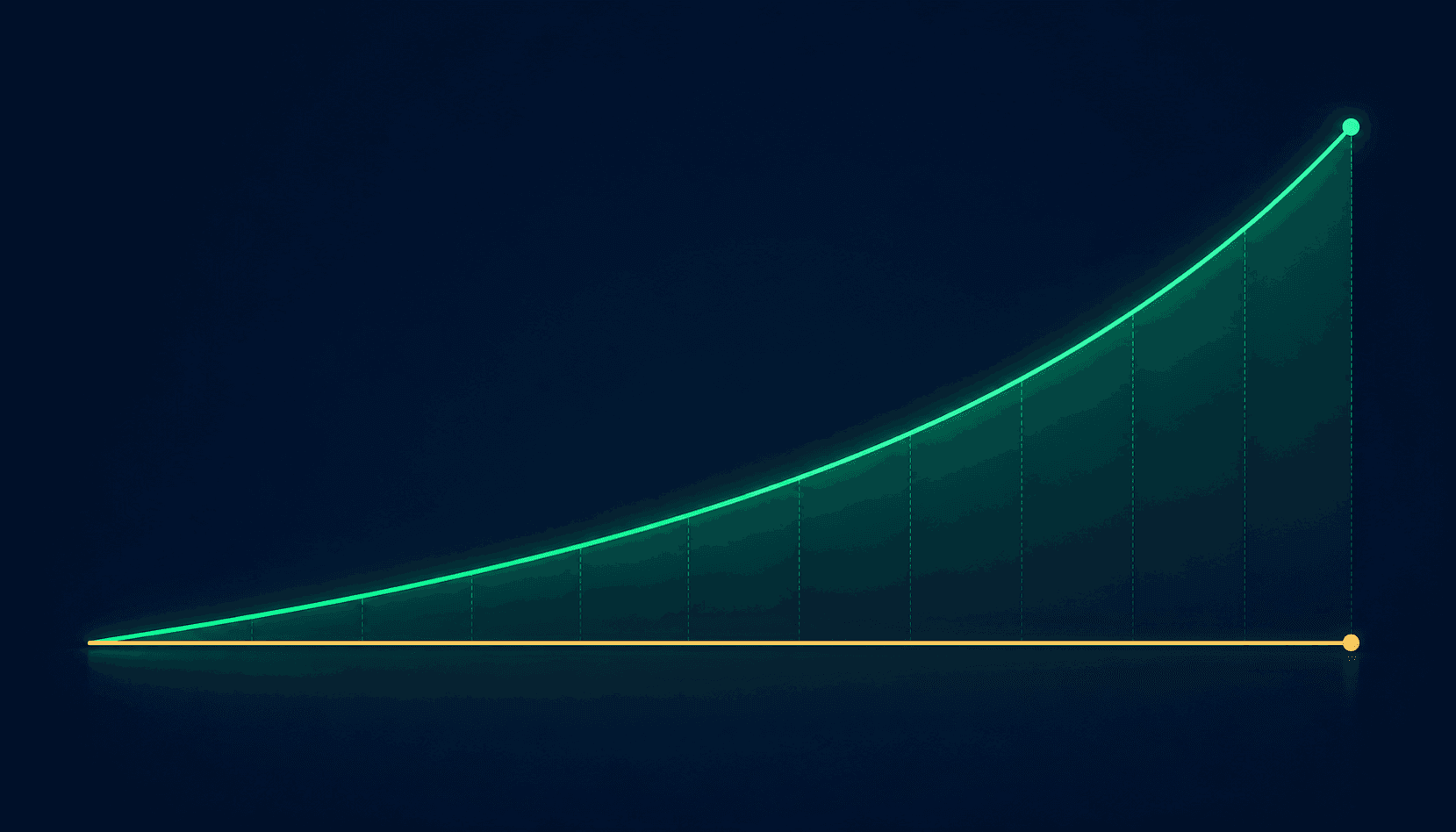
Inflation at 3% per year does not add 3% to the original price over time. It compounds. After 10 years at 3% inflation, prices are not 30% higher -- they are about 34% higher. After 20 years, approximately 81% higher. After 30 years, approximately 143% higher. This compounding is why inflation, even at seemingly modest rates, dramatically erodes purchasing power over investment and retirement timelines.
What is CPI?
Direct answer: The Consumer Price Index (CPI) is a measure of the average change over time in the prices paid by urban consumers for a representative basket of goods and services. It is published monthly by the US Bureau of Labor Statistics and is the primary benchmark for measuring inflation.
What the CPI basket includes:
| CPI Category | Approximate Weight |
|---|---|
| Housing (rent, utilities, furnishings) | ~33% |
| Food and beverages | ~15% |
| Transportation (vehicles, fuel, public transit) | ~17% |
| Medical care | ~9% |
| Recreation | ~6% |
| Education and communication | ~6% |
| Apparel | ~3% |
| Other goods and services | ~4% |
Source: Bureau of Labor Statistics CPI basket weights (approximate, as of 2024). Weights are updated periodically.
CPI-U vs CPI-W
CPI-U covers all urban consumers (about 93% of the US population). CPI-W covers urban wage earners and clerical workers specifically. Social Security cost-of-living adjustments use CPI-W. Most general inflation discussions refer to CPI-U.
Chained CPI
Chained CPI (C-CPI-U) adjusts for the substitution effect -- when a product gets expensive, consumers often shift to cheaper alternatives. Chained CPI typically runs slightly lower than standard CPI because it accounts for this behavioral response.
Core CPI
Core CPI excludes food and energy prices, which are volatile and often driven by temporary factors (weather, geopolitical events). Core CPI is used to identify underlying inflation trends without the noise of commodity price swings.
Annual US CPI since 2010 (selected years):
| Year | Annual CPI-U Change |
|---|---|
| 2010 | 1.6% |
| 2012 | 2.1% |
| 2015 | 0.1% |
| 2017 | 2.1% |
| 2019 | 2.3% |
| 2020 | 1.2% |
| 2021 | 7.0% |
| 2022 | 6.5% |
| 2023 | 3.4% |
| 2024 | 2.9% |
| 2025 | ~2.8% (full year estimate) |
Source: Bureau of Labor Statistics -- official CPI-U historical data. 2025 figure is approximate based on available data.
How inflation calculators work
Direct answer: Inflation calculators use historical CPI data to calculate the equivalent purchasing power of a dollar amount in a different year. The formula is: Adjusted Value = Original Amount × (CPI in Target Year / CPI in Base Year).
The calculation step by step:
- Step 1: Find the CPI for the starting year
- Step 2: Find the CPI for the ending year
- Step 3: Divide: ending CPI / starting CPI
- Step 4: Multiply the original dollar amount by this ratio
Example: Converting $1,000 in 1990 to 2026 dollars
- CPI in 1990: approximately 130.7
- CPI in 2026: approximately 320+ (projected from recent trend)
- Ratio: 320 / 130.7 ≈ 2.45
- Adjusted value: $1,000 × 2.45 = approximately $2,450
The reverse calculation:To find what a future amount is expressed in current-year dollars: Today’s Value = Future Amount × (CPI today / CPI in future year). This is useful for financial planning: what does a $3,000/month retirement target in 2040 mean in current purchasing power?
Real example 1: what is $100 from 1913 worth today?
Starting point: $100 in 1913 (the first year the BLS began tracking CPI).
CPI in 1913: approximately 9.9 (index base: 1982–84 = 100)
CPI in 2026: approximately 320 (projected from 2025 data)
Calculation: $100 × (320 / 9.9) ≈ $3,232
$100 in 1913 had approximately the purchasing power of $3,232 in 2026.
This is cumulative inflation of approximately 3,132% over 113 years, or approximately 3.0% annualized. A worker earning $1,000 per year in 1913 -- a comfortable professional salary at the time -- would need to earn approximately $32,300 per year in 2026 just to maintain the same purchasing power.
| Starting Value | Starting Year | 2026 Equivalent |
|---|---|---|
| $100 | 1913 | ~$3,232 |
| $100 | 1940 | ~$2,200 |
| $100 | 1960 | ~$1,070 |
| $100 | 1980 | ~$388 |
| $100 | 1990 | ~$245 |
| $100 | 2000 | ~$185 |
| $100 | 2010 | ~$148 |
| $100 | 2020 | ~$123 |
Source: BLS CPI data with 2026 projection. Figures are approximate.
Real example 2: salary comparison across time
Scenario: A software engineer earns $50,000 per year in 2000. A software engineer earns $90,000 in 2026. Has their real purchasing power improved?
$50,000 in 2000 adjusted to 2026:
- CPI in 2000: approximately 172.2
- CPI in 2026: approximately 320
- Ratio: 320 / 172.2 ≈ 1.86
- $50,000 × 1.86 = approximately $93,000 in 2026 dollars
The 2026 salary of $90,000 is actually less in real terms than the 2000 salary of $50,000.
The nominal salary increased 80%. Inflation over the same period increased approximately 86%. The real purchasing power declined slightly.
| Metric | 2000 | 2026 |
|---|---|---|
| Nominal salary | $50,000 | $90,000 |
| In 2026 dollars | $93,000 | $90,000 |
| Real change | -- | -$3,000 (-3.2%) |
| Nominal change | -- | +$40,000 (+80%) |
For the engineer to have truly improved their financial position, the 2026 salary would need to exceed approximately $93,000. A salary of $110,000 in 2026 would represent a real improvement of about 18% over their 2000 purchasing power.
Real example 3: home price inflation
Scenario: A house is purchased for $120,000 in 1995. It is sold in 2026 for $380,000. Has it increased in real value, or did it mostly just keep pace with inflation?
$120,000 in 1995 adjusted to 2026:
- CPI in 1995: approximately 152.4
- CPI in 2026: approximately 320
- Ratio: 320 / 152.4 ≈ 2.10
- $120,000 × 2.10 = approximately $252,000 in 2026 dollars
The home sold for $380,000. The inflation-adjusted value of the original purchase is $252,000. The real appreciation (above inflation) is approximately $128,000, or about a 51% real gain over 31 years -- roughly 1.3% real annual appreciation beyond inflation.
What this means for decisions:
Many homeowners believe they have grown wealthy from housing appreciation. In most markets, residential real estate roughly tracks inflation over long periods. Separating the real appreciation from the inflation component is essential for understanding whether housing has been a true investment or primarily an inflation hedge.

Inflation vs purchasing power
Direct answer: Inflation and purchasing power are inversely related. When inflation rises, purchasing power falls. They measure the same phenomenon from opposite directions.
| Aspect | Inflation | Purchasing Power |
|---|---|---|
| Definition | Rate at which prices rise | Amount of goods money can buy |
| Direction | Higher = prices rising | Higher = money buys more |
| Relationship | Inversely proportional | Inversely proportional |
| Measured by | CPI, PCE, PPI | Adjusted dollar amounts |
| Example at 5% inflation | Prices 5% higher | $100 buys 4.8% less |
| Example at 0% inflation | No change | Purchasing power stable |
| Impact on savers | Negative (savings worth less) | Savings buy less over time |
| Impact on borrowers | Positive (debt shrinks in real terms) | Less relevant |
| Key insight | Inflation is the measurement | Purchasing power is the experience |
Inflation vs investment returns
Direct answer: The real return on an investment is its nominal return minus the inflation rate. A 7% return in a 4% inflation environment produces a 3% real return. Investments must beat inflation to generate real wealth growth.
| Nominal Return | Inflation Rate | Real Return | What This Means |
|---|---|---|---|
| 10% | 2% | 8% | Strong real wealth growth |
| 7% | 3% | 4% | Solid real growth (historical stocks average) |
| 5% | 3% | 2% | Modest real growth |
| 3% | 3% | 0% | Breaking even in real terms |
| 2% | 4% | -2% | Losing purchasing power |
| 0.5% | 3% | -2.5% | High-yield savings underperforming (common recently) |
| -5% | 3% | -8% | Poor investment in high inflation |
The Rule of 70 for inflation:
Divide 70 by the inflation rate to estimate how many years it takes for prices to double. At 2% inflation, prices double in approximately 35 years. At 4% inflation, approximately 17.5 years. At 7% inflation (2021 rates), prices would double in 10 years. A retiree planning for a 25-year retirement at 3% inflation will see prices roughly double during their retirement.
Fixed income investments and inflation:
Bonds and CDs are particularly vulnerable. A 5-year CD earning 4% when inflation runs 5% has a negative real return of -1% per year. Treasury Inflation-Protected Securities (TIPS) are US government bonds designed specifically to address this by adjusting principal and interest payments with CPI.
Long-term investment growth should always be compared against inflation-adjusted returns using compound growth calculations. See the Compound Interest Calculator Guide for worked examples, and use the Compound Interest Calculator to model your own scenarios.
How inflation affects retirement
Direct answer: Inflation is the primary long-term risk for retirees. A retirement income that covers expenses at age 65 may cover only half those expenses by age 85 if inflation averages 3% annually over 20 years.
At 3% annual inflation, purchasing power halves in approximately 23 years.
| Retirement Income (Age 65) | Years Retired | Inflation Rate | Required Income at End |
|---|---|---|---|
| $60,000 | 20 years | 2% | $89,200 |
| $60,000 | 20 years | 3% | $108,400 |
| $60,000 | 25 years | 3% | $125,600 |
| $60,000 | 30 years | 3% | $145,600 |
Social Security and inflation
Social Security benefits receive annual Cost of Living Adjustments (COLAs) based on CPI-W. These adjustments partially protect retirement income but have historically lagged the experienced inflation of retirees, who spend more on healthcare (which inflates faster than general CPI).
Retirement portfolio implications
A portfolio that is 100% in bonds or cash-equivalent savings is highly vulnerable to inflation over a 20–30 year retirement. A mix that includes equities (which have historically returned 6–7% real over long periods) provides better inflation protection.
For further reading on retirement savings context, the Net Worth by Age 2026 guide shows median retirement savings by age group relative to benchmarks.
How inflation affects salaries
Direct answer: Real wage growth (wage growth above the inflation rate) is what determines whether workers are gaining or losing financial ground. Nominal wage increases that lag inflation are real pay cuts.
The real wage calculation:
Real wage change = Nominal wage change - Inflation rate
A 3% salary increase in a year with 5% inflation means a -2% real wage change. The paycheck is bigger. The purchasing power is lower.
Negotiating salaries with inflation in mind:
The baseline for any salary negotiation is: the offer must beat inflation to represent real improvement. A 2% cost-of-living raise in a 4% inflation year is a 2% real pay cut framed as a raise. Practical benchmark: if the BLS’s most recent 12-month CPI change is 3.5%, a salary raise of 3.5% maintains purchasing power. Anything above 3.5% is a real increase.
See the Salary vs Hourly guide for further context on compensation comparisons.
Common inflation mistakes
Comparing raw dollar values across years
- •"$10,000 in 1970 was a lot of money" compared to "$10,000 today is modest" is not a useful comparison without inflation adjustment
- •Always adjust to a common year before comparing historical dollar amounts
Ignoring inflation in retirement plans
- •Targeting a fixed dollar amount ($1M, $2M) without accounting for the inflation between now and retirement sets the wrong goal
- •A $1M target set in 2010 needs to be roughly $1.48M in 2026 terms to represent the same purchasing power
Confusing nominal and real investment returns
- •"The market returned 12% last year" is meaningless without knowing what inflation was
- •If inflation was 4%, the real return was 8%. If inflation was 10%, the real return was 2%
Treating savings accounts as inflation-beating
- •High-yield savings accounts in 2026 pay approximately 4-5% APY
- •When inflation also runs at 3-4%, the real return is 0-1%, not the full interest rate
Assuming salary growth means financial progress
- •A salary that increases every year but grows slower than inflation produces cumulative real income loss
- •Track real wage growth, not nominal wage growth, to understand whether financial position is improving
Not accounting for category-specific inflation
- •Overall CPI may be 3%, but healthcare inflation has historically run 4-6% and higher education inflation 4-8%
- •People who spend heavily on healthcare or pay college tuition experience higher effective inflation than general CPI suggests
Inflation calculator example
Inflation calculations require CPI data and straightforward arithmetic. The formula is simple. The data is less straightforward to find and apply.
Many people compare historical purchasing power using the Vortenza Inflation Calculator before evaluating salaries, investments, or long-term financial goals. Enter a dollar amount, a starting year, and an ending year (up to 2026), and the calculator returns the inflation-adjusted equivalent using BLS CPI data.
The most common uses:
- ✓Converting a historical salary offer to today's dollars before accepting or negotiating
- ✓Understanding how much a home's value has actually appreciated above inflation
- ✓Comparing investment returns against inflation to find real returns
- ✓Calculating how much retirement savings will purchase in future years
- ✓Evaluating whether a cost-of-living raise represents a real increase or just keeps pace
Inflation calculator vs CPI tables
| Aspect | Inflation Calculator | CPI Tables (BLS Raw Data) |
|---|---|---|
| Ease of use | High -- enter amount and years | Low -- navigate and cross-reference tables |
| Accuracy | Same data source (BLS CPI) | Primary source |
| Intermediate years | Calculated automatically | Must locate each year's index |
| Multiple conversions | Fast (one calculation per query) | Slow (manual for each) |
| Mobile use | Easy | Difficult |
| Data transparency | Shows adjustment factor | Shows raw index numbers |
| Historical range | Typically 1913-present | 1913-present (official) |
| Explanation of result | Contextualizes the adjusted value | Raw numbers only |
Inflation-protected assets
Not all assets respond to inflation the same way. Understanding which assets protect purchasing power -- and which erode it -- is one of the most practical applications of inflation knowledge.
| Asset | Inflation Protection | How It Works |
|---|---|---|
| Stocks (Equities) | High | Corporate revenues and earnings tend to rise with inflation over time. Historically 6-7% real return over long periods. |
| Real Estate | Medium-High | Property values and rental income rise with general prices. Specific markets vary significantly. Illiquid. |
| TIPS (Treasury Inflation-Protected Securities) | High | Principal and interest payments adjust directly with CPI. Designed specifically for inflation protection. |
| Commodities | Medium | Raw material prices often drive inflation, so commodity investments can hedge it. Volatile. |
| Bonds (Fixed-Rate) | Low-Medium | Fixed interest payments lose value in real terms during high inflation. Short-duration bonds are less vulnerable. |
| Cash / Savings Accounts | Low | Earns nominal interest but purchasing power erodes if interest rate is below inflation. Appropriate for emergency funds only. |
Key principle:
Assets that generate income or returns tied to real economic activity (equities, real assets) tend to protect against inflation over long periods. Assets with fixed nominal returns (cash, fixed-rate bonds) are most exposed to inflation risk. A diversified portfolio that includes both growth assets and inflation-specific hedges (TIPS, real estate) is the standard approach for long-term inflation protection.
One-minute purchasing power audit
Understanding your current position
- □Do you know what your current salary would have been worth in purchasing power 10 years ago?
- □Is your salary growing faster or slower than recent inflation rates?
- □Are any of your savings sitting in accounts earning less than the current inflation rate?
Investment check
- □What is the nominal return on your investments over the past 5 years?
- □What was the average inflation rate over that same period?
- □What is your actual real return (nominal minus inflation)?
Retirement planning
- □Is your retirement income target expressed in current dollars or in future dollars?
- □Have you accounted for inflation over the years between now and retirement?
- □Have you accounted for inflation during a 20-30 year retirement period?
Salary check
- □What was your salary 5 years ago, and what would that be in current dollars?
- □Is your current salary ahead of or behind that inflation-adjusted figure?
- □Are you negotiating future raises with the current inflation rate in mind?
Quick answers
Concise, directly extractable answers optimized for ChatGPT, Gemini, Perplexity, Claude, and Google AI Overviews.
For in-depth explanations with worked examples, see Frequently asked questions below.
Q: What is inflation?
A: Inflation is the sustained increase in the general price level of goods and services over time, resulting in a decrease in purchasing power. When inflation runs at 3% per year, prices that cost $100 today will cost $103 next year. Measured by the Consumer Price Index (CPI) in the US, inflation is tracked monthly by the Bureau of Labor Statistics.
Q: What is purchasing power?
A: Purchasing power is the amount of goods and services that a given sum of money can actually buy. When inflation rises, purchasing power falls -- the same nominal dollar amount buys fewer goods. Purchasing power determines what money can buy, not what it is worth on paper.
Q: How much is $100 from 1913 worth today?
A: Based on BLS CPI data, $100 in 1913 is equivalent to approximately $3,200 in 2026 purchasing power, reflecting cumulative inflation of about 3,100% over 113 years, or roughly 3% annualized. The US dollar has lost approximately 97% of its purchasing power since CPI tracking began in 1913.
Q: What is the CPI?
A: CPI (Consumer Price Index) is the primary measure of inflation in the United States, published monthly by the Bureau of Labor Statistics. It tracks price changes for a representative basket of approximately 80,000 goods and services across categories including housing (33%), transportation (17%), food (15%), and medical care (9%). Most inflation calculations use CPI-U (all urban consumers).
Q: How do inflation calculators work?
A: Inflation calculators use historical CPI data from the Bureau of Labor Statistics. The formula is: Adjusted Value = Original Amount x (CPI in Target Year / CPI in Base Year). For example, converting $1,000 in 1990 to 2026: divide the 2026 CPI by the 1990 CPI, then multiply by the original amount.
Q: What is the difference between nominal and real returns?
A: Nominal return is the percentage gain on an investment before adjusting for inflation. Real return is the nominal return minus the inflation rate. A 7% investment return in a year with 4% inflation produces a 3% real return. Real return measures actual growth in purchasing power.
Q: How does inflation affect retirement savings?
A: At 3% annual inflation, purchasing power halves in approximately 23 years. A retiree who needs $60,000/year at 65 would need approximately $108,000/year by 85 to maintain the same standard of living. Portfolios must include growth assets (like equities) to maintain purchasing power over a 20-30 year retirement.
Q: Is a salary increase always a real raise?
A: No. A salary increase is only a real raise if it exceeds the inflation rate. A 2% raise in a year with 4% inflation is a 2% real pay cut -- the nominal income is higher, but its purchasing power has decreased. Real wage growth = nominal wage growth minus inflation rate.
Q: What causes inflation?
A: The main causes are: demand-pull inflation (consumer demand exceeds supply), cost-push inflation (rising input costs like energy or labor), supply constraints (shortages that limit available goods), and monetary expansion (increasing money supply faster than economic output).
Q: What is core inflation?
A: Core inflation is the CPI excluding food and energy prices, which are volatile and often driven by temporary factors. Core inflation is used to identify underlying, persistent inflation trends. The Federal Reserve uses core PCE (Personal Consumption Expenditures) as its primary inflation gauge, targeting approximately 2%.
Q: What is real versus nominal interest rate?
A: The real interest rate is the nominal interest rate minus the inflation rate. A savings account earning 4% when inflation is 3% has a real interest rate of 1%. Real interest rates determine the actual purchasing power impact of borrowing or saving.
Q: How much has the US dollar lost value since 2000?
A: Based on BLS CPI data, $1.00 in 2000 had the purchasing power of approximately $1.85 in 2026. Equivalently, $100 in 2000 would need to be approximately $185 in 2026 to buy the same goods. This represents approximately 85% cumulative inflation from 2000 to 2026, or about 2.4% annualized.
Q: What is the Federal Reserve's inflation target?
A: The Federal Reserve targets 2% annual inflation as measured by the PCE (Personal Consumption Expenditures) price index. The 2% target balances price stability with enough monetary flexibility to respond to economic downturns.
Q: What are TIPS and how do they relate to inflation?
A: TIPS (Treasury Inflation-Protected Securities) are US government bonds where both the principal and interest payments adjust with CPI. If inflation is 3%, the principal increases by 3%, and interest is paid on the higher principal. TIPS are specifically designed to protect purchasing power.
Q: How does inflation affect home values?
A: Home prices generally track inflation over long periods, though specific markets outperform or underperform substantially. A home that appears to have doubled in value may have only maintained purchasing power if prices broadly doubled over the same period. True real appreciation is home price growth above the inflation rate.
Frequently asked questions
Full explanations with worked examples and context. For concise one-paragraph answers, see Quick answers above.
What is inflation and why does it happen?
+
Inflation is the sustained rise in the general price level of goods and services, which reduces purchasing power. It happens because of demand-pull forces (consumer demand exceeds production capacity), supply constraints (limited goods or higher input costs), monetary expansion (more money chasing the same goods), or cost-push pressures (rising wages or energy prices). In most modern economies, some low-level inflation (1-3%) is considered normal and even healthy. Deflation (falling prices) is often more economically damaging because it leads to deferred spending and debt crises.
What is CPI and how is it calculated?
+
CPI (Consumer Price Index) is published monthly by the US Bureau of Labor Statistics. BLS surveys approximately 80,000 goods and services across eight major categories (housing, food, transportation, medical care, etc.) and tracks how prices change month-to-month and year-over-year. The result is expressed as an index number (currently calibrated so 1982-84 = 100). CPI-U covers all urban consumers and is the most widely used version. The 12-month percent change in CPI-U is what most people refer to as "the inflation rate."
How much purchasing power has the dollar lost?
+
According to BLS CPI data, the US dollar has lost approximately 97% of its purchasing power since 1913, when the BLS began tracking CPI. What cost $1 in 1913 costs approximately $31-32 in 2026. Since 2000, the dollar has lost approximately 46% of its purchasing power -- meaning $100 in 2000 buys what $54 would buy today. Since 2010, the dollar has lost approximately 32% of its purchasing power, accelerated significantly by the 2021-2023 inflation spike.
How do I use an inflation calculator?
+
Enter the dollar amount, the starting year, and the ending year. The calculator applies the BLS CPI formula: Adjusted Value = Original Amount x (Ending CPI / Starting CPI). To convert old amounts to today's dollars: enter the historical amount and year, set ending year to current year. To estimate future purchasing power needed: enter today's amount as the start, the future year as the end.
What is purchasing power and why does it matter?
+
Purchasing power is what money can actually buy. It matters because financial decisions based on nominal dollar amounts without accounting for inflation are systematically misleading. A salary comparison, a savings goal, an investment return, or a retirement target that ignores inflation produces incorrect conclusions. Nominal gains can create the illusion of wealth when inflation is ignored. Purchasing power-adjusted comparisons reflect financial reality; nominal comparisons do not.
How does inflation affect fixed-income savers?
+
Fixed-income savers are directly harmed by inflation because the interest rate on their savings may not keep pace with rising prices. A savings account earning 1% when inflation runs 4% loses 3% of purchasing power each year. Over 10 years, this produces a real loss of approximately 26% of purchasing power despite positive nominal returns. Inflation reduces purchasing power even when account balances stay the same or grow slowly. This is why financial advisors typically recommend a mix of assets that includes equities, which have historically outperformed inflation.
What is the rule of 70 for inflation?
+
The rule of 70 is a quick mental calculation: divide 70 by the inflation rate to estimate how many years prices will take to double. At 2% inflation, prices double in approximately 35 years. At 3% inflation, approximately 23 years. At 7% inflation (the 2021 rate), approximately 10 years. This rule is useful for retirement planning -- a 25-year retirement at 3% inflation will see prices roughly double over the retirement period, meaning a retirement income that feels comfortable at 65 buys roughly half as much at 87.
How should I adjust my retirement plan for inflation?
+
Set retirement income targets in current-year dollars and then calculate the future amount needed. For example, if you need $60,000/year in current purchasing power and you retire in 20 years, apply a 3% annual inflation rate: $60,000 x (1.03)^20 = approximately $108,000/year needed. Also plan for inflation during retirement: the purchasing power needed at age 85 is significantly higher than at 65. A financial rule of thumb is to assume your expenses will double at least once during a 25-year retirement. Growth assets (equities) provide better inflation protection than bonds over long timeframes.
Why do different people experience different rates of inflation?
+
CPI is an average across a broad basket of goods. Individual inflation rates depend on spending patterns. People who spend heavily on healthcare (which historically inflates at 4-6%/year) experience higher effective inflation than general CPI suggests. People who spend more on technology (which often deflates) experience lower effective inflation. Retirees typically experience higher inflation than workers because they spend more on healthcare and less on work-related costs. Urban renters experience higher housing inflation in cities where rents outpace CPI.
Is real estate a good inflation hedge?
+
Residential real estate has historically roughly tracked inflation over long periods at the national level, though specific markets diverge significantly. Real estate can be an inflation hedge because both property values and rental income tend to rise with inflation. However, real price appreciation (above inflation) is more modest than nominal gains suggest, and real estate is illiquid, location-specific, and carries maintenance and transaction costs. Commercial real estate and REITs can also hedge inflation and provide more liquidity than direct property ownership.
What is the difference between CPI and PCE?
+
Both CPI and PCE (Personal Consumption Expenditures) measure inflation, but they differ in scope and methodology. CPI tracks what consumers actually spend on a fixed basket of goods. PCE tracks what businesses spend on behalf of consumers (including employer-provided healthcare) and adjusts for consumer substitutions when prices change. PCE typically runs slightly lower than CPI. The Federal Reserve uses PCE as its primary inflation target (2% PCE), while CPI is more commonly cited in media and used for Social Security adjustments.
How does the Federal Reserve control inflation?
+
The Federal Reserve's primary inflation-fighting tool is the federal funds rate -- the interest rate at which banks lend to each other overnight. Raising this rate increases borrowing costs throughout the economy, reducing demand for credit, slowing consumer spending and business investment, which reduces demand-pull inflationary pressure. The Fed also uses quantitative tightening (reducing its bond holdings) to reduce money supply. These tools work with a lag of 12-18 months. The Fed targets approximately 2% annual inflation as measured by PCE.
Can inflation be good?
+
Moderate inflation (1-3%) is generally considered economically healthy. It encourages spending and investment rather than cash hoarding (if money loses value slowly, people prefer to spend or invest it rather than hold cash). It gives central banks room to cut interest rates during downturns. It allows real wages to fall slightly without nominal wage cuts when demand for labor decreases (nominal wage cuts are psychologically difficult and economically disruptive). Zero inflation or deflation is typically more economically damaging than low positive inflation.
What is hyperinflation?
+
Hyperinflation is extremely rapid inflation, generally defined as exceeding 50% per month. It destroys purchasing power at catastrophic speed. Historical examples: Germany in 1923 (prices doubled every few days), Zimbabwe in 2008 (estimated peak inflation of 79.6 billion percent per month), Venezuela in 2018 (over 1 million percent annually). Hyperinflation is typically caused by governments printing money to finance deficits when they cannot borrow or tax enough. It destroys savings, collapses the currency, and causes severe economic hardship.
How do I inflation-adjust a historical salary offer?
+
Use the BLS CPI formula: Current Equivalent = Historical Salary x (Current CPI / Historical CPI). Example: a $45,000 salary in 2005 in 2026 dollars: CPI in 2005 = 195.3, CPI in 2026 = approximately 320. $45,000 x (320 / 195.3) = approximately $73,760. So $45,000 in 2005 had the purchasing power of approximately $73,760 in 2026. Many people use the Vortenza Inflation Calculator to do this quickly.
What inflation rate should I use for retirement planning?
+
Most financial planners use 2.5%-3% as a conservative baseline, aligned with the Federal Reserve's 2% PCE target plus a buffer. For healthcare-heavy retirement budgets, use 4%-5% for healthcare line items specifically, since medical inflation has historically run higher than general CPI. A blended rate of 3% for general expenses is a reasonable planning assumption for most retirees.
Final verdict
Inflation is the background force that makes every financial number meaningless without context. A salary, a home price, an investment return, a retirement target -- all of these require inflation adjustment before they can be meaningfully compared across time.
Purchasing power determines what money can buy, not what it is worth on paper. A salary increase below inflation is a real pay cut. An investment return below inflation is a real loss. A retirement plan that does not account for inflation underestimates required savings.
The CPI gives us the data to make these adjustments. The inflation calculator applies the arithmetic automatically. The knowledge of why to adjust is what makes the results useful.
Many consumers and investors use the Vortenza Inflation Calculator to compare purchasing power across decades and make more informed financial decisions. Enter a dollar amount and two years, and the calculator shows exactly how much purchasing power has changed between them using BLS CPI data.
About this guide
Published by the Vortenza Editorial Team. CPI data and inflation rates sourced from the US Bureau of Labor Statistics Consumer Price Index database. Historical CPI values from BLS CPI-U All Items series (1913–2026). Annual CPI rates for 2010–2024 from BLS official records; 2025 figure estimated from available data. Purchasing power calculations use the standard BLS formula. Federal Reserve inflation targeting information from Federal Reserve Board official communications. All dollar conversions are approximate.